

Article: How does menopause affect hair?
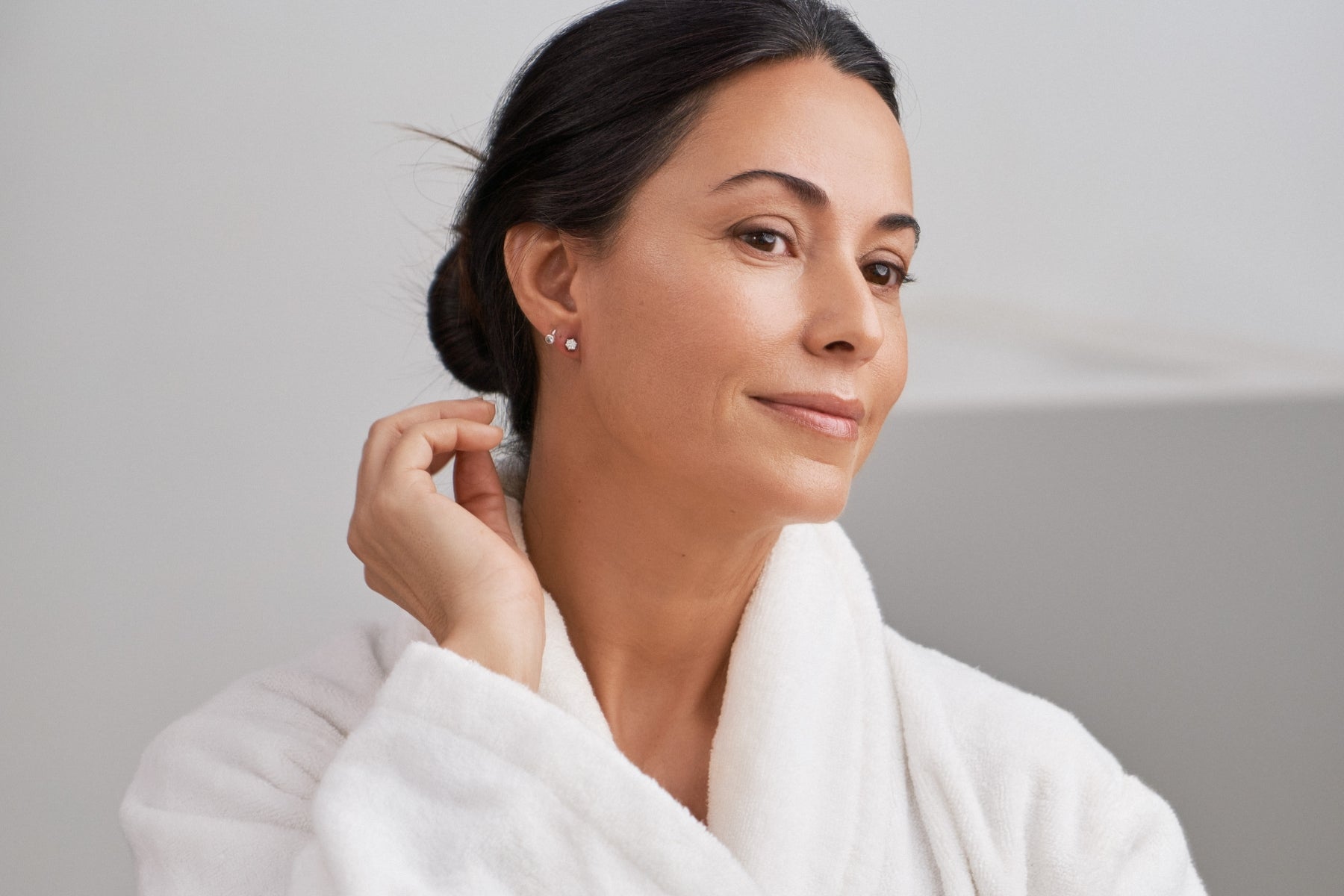
How does menopause affect hair?
- It's common to notice less density, more dryness and changes in texture.
- Hormonal changes alter the follicle cycle and the balance of the scalp.
- A gentle routine + hydration + lifestyle make all the difference.
The transition to menopause can bring changes to your hair: lower density, thinning or a different texture. Some women also notice more dryness, fragility or scalp discomfort. These changes don't affect every woman, nor with the same intensity.
Natural menopause is confirmed after 12 consecutive months without a period, provided there is no other cause to explain it. Perimenopause is the transition stage, which can begin several years before the last period and lasts until one year after it.
During this transition, hormonal fluctuations and the subsequent drop in oestrogen can influence the biology of the hair. Age, genetic predisposition, general health and nutritional factors also play a part.
Understanding what is changing helps you adapt your care and recognize when it's a good idea to see a dermatologist.
These changes usually begin gently between the ages of 45 and 55, a year before menopause officially arrives, a period known as the climacteric or perimenopause.
At first, the changes are almost imperceptible and can be put down to a bad day, as happens during your period (when oestrogen levels also drop, leaving hair with less body). But after a few months, a more marked deficit in the production of female hormones, specifically oestrogen and progesterone, makes the changes more evident by modifying follicle metabolism, affecting both the amount of hair and how it looks. The result is finer, more fragile and duller hair.
Although the main role of oestrogen is to regulate the menstrual cycle, the wide variety of symptoms that appear during menopause shows its varied and profound effects throughout the body.
In the skin and in the hair, oestrogen has a decisive influence on thickness, hydration, pigmentation, sebum content and ageing.
How does menopause affect the scalp and hair?
1. Changes in the hair cycle and density
Sex hormones help regulate the hair cycle. During the transition to menopause, changes in hair growth may occur, although every woman responds differently.
Female pattern hair loss is more common after menopause. It is characterized by progressive thinning of some of the hair and a loss of density, especially on the top of the head. A parting that keeps getting wider can be one of its first signs.
Diffuse shedding, known as telogen effluvium, can also occur, linked to various triggers such as illness, significant weight loss, nutritional deficiencies or stress.
Thinning and shedding can coexist, but they are not the same. Identifying the cause is essential to choose the right treatment.

2. Scalp dryness and sensitivity
During this stage, changes in the skin's hydration and barrier function may appear. For some women, the scalp feels drier, tighter or more sensitive.
It's best to adapt your cleansing to its needs and avoid very hot water, vigorous rubbing and products that cause discomfort.
Persistent itching or flaking deserves a professional assessment: it shouldn't automatically be put down to menopause.
3. Changes in hair quality
With age and during the hormonal transition, some women notice changes in the thickness, texture and behaviour of their hair.
In addition, the cumulative effects of colouring, bleaching, heat and friction can make the fibre rougher and more prone to breakage.
It's important to tell breakage apart from shedding at the root. Conditioning helps make detangling easier and reduces friction and breakage, whereas a progressive loss of density requires assessing what is happening in the follicle.
4. Hot flushes, sweating and comfort
The sudden "hot flushes" that appear during menopause can come with sweating and cause discomfort on the scalp. Sweat is rich in urea, an alkali that raises the pH, and a change in the scalp's pH encourages itching and even irritation.
To ease this annoying itching, you simply need to wash your hair. A quick wash with pH-adapted cosmetics like the ones we suggest will restore the pH and relieve the discomfort.
If you suffer from irritation, it's important not to leave your scalp damp for long, as this can also cause itching by upsetting the skin's microbiota.
If the itching persists or you notice redness, pain or flaking, see your dermatologist or trichologist.
5. Stress and well-being
This transition may coincide with sleep difficulties and stressful situations that affect well-being. Significant stress can trigger telogen effluvium, with shedding that usually becomes visible a few months later.
However, not all hair loss at this stage is explained by stress. If it remains heavy or comes with a loss of density, it's a good idea to see a professional to identify the cause.
What changes might you notice?
- Less body in your ponytail or less volume.
- A more visible parting or loss of density on top.
- More shedding when washing or combing.
- Hair that is more fragile, rougher or prone to breakage.
- Dryness, tightness or discomfort on the scalp.
How to care for your hair during menopause
Care should be adapted to the condition of the scalp and the hair fibre. A suitable routine can improve comfort, softness and manageability, and help reduce breakage. If there is alopecia, this care complements the treatment prescribed by your dermatologist.
1. Cleansing: the foundation for a comfortable scalp and shiny hair
Regular, gentle hygiene helps keep the scalp balanced and preserve the shine and elasticity of the fibre. During perimenopause and menopause it's common to notice more sensitivity, dryness or sweating; adjust how often you wash without fear: from daily to every 2–3 days, depending on your needs and comfort.
- Frequency "made to measure": if you exercise or have hot flushes, wash whenever you need to. Proper cleansing doesn't make hair greasier.
- Lukewarm water and a gentle massage: with your fingertips; avoid nails and harsh rubbing.
- Lather = a tool, not a goal: effectiveness doesn't depend on "how much" lather, but on gentle surfactants and thorough rinsing.
- Double cleanse: if one application isn't enough to remove dirt and product build-up, rinse and apply a second time.
- Rinse thoroughly: to avoid residue that dulls shine.
Modesta Cassinello recommendations
- H02 Repairing Shampoo, for normal to dry scalps and dry, coloured or bleached hair See H02
- H03 Shine and Vitality Shampoo, fragrance-free, an option when you're looking for an unscented formula See H03
Good practices
- Pre-detangle on dry hair (from ends to mid-lengths) to minimize breakage in the shower.
- Apply shampoo to the scalp; let the lather cleanse the mid-lengths and ends as you rinse.
- If you have an oily scalp and dry, damaged hair and want to do a deep-cleansing treatment, apply a pre-shampoo treatment. This means applying conditioner or oil to the mid-lengths and ends on dry hair and then washing as usual.
Avoid
- Nails or hard brushes on the scalp.
- Routinely using very hot water.
- Building up styling residue or dry shampoo without alternating with washes.
After cleansing, always condition (conditioner or mask) to seal the cuticle, detangle and reduce breakage, while keeping volume and natural movement.

2. Conditioning: the key step for softness and less breakage
After shampooing, apply conditioner to the mid-lengths and ends. It helps smooth the hair's surface, makes detangling easier and reduces friction and breakage. Adjust the amount and texture to the thickness and condition of your hair; add a mask when you need more intensive conditioning.
- Fine hair: apply from mid-lengths to ends to hydrate without weighing it down.
- Thick or dry hair: combine conditioner with a mask 1–2 times a week for extra nourishment.
- Anti-frizz and lightness: add a leave-in conditioner when you finish styling.
Modesta Cassinello recommendations
H04 Revitalizing Conditioner. Makes detangling easier and adds softness and manageability without weighing hair down See H04 Conditioner
H08 Leave-in Conditioning Spray. Extra softness and frizz control after drying, with no weight or residue. See H08 Spray
H09 Nourishing Mask. A more intensive treatment that helps improve softness, detangling, natural-looking shine and manageability, silicone-free and without a heavy feel. See H09 Mask
3. Colouring and styling
You can adapt your cut and styling to add movement and make everyday care easier.
Colouring and bleaching can damage the fibre and, in some people, cause irritation or allergy. If you notice scalp discomfort, review these processes with a professional.
A dye being presented as plant-based or natural doesn't guarantee that it's suitable for a sensitive scalp. Always follow its instructions and the allergy tests indicated by the manufacturer.
4. Lifestyle
We advise you to follow a Mediterranean-style diet as part of a healthy lifestyle. All the micronutrients your hair needs to grow strong and healthy are included in our acclaimed Mediterranean Diet.
A diet:
- Rich in minimally processed, fresh, seasonal foods, with a predominance of vegetables, wholegrain cereals, pulses, nuts and fruit.
- That includes dairy. Careful! We're cutting it out, yet it's a very good source of bioavailable calcium. If milk doesn't agree with you, you can turn to fermented options such as yoghurt and kefir, which are also full of beneficial microorganisms for a healthy microbiota.
- That includes fish, eggs and meat, giving you adequate levels of iron, zinc, copper and selenium.
- That promotes virgin olive oil as the main cooking fat and water as the main drink.
A varied diet with enough energy, protein, vitamins and minerals contributes to the maintenance of hair. Avoid very restrictive diets and rapid weight loss.
If a deficiency is suspected, a healthcare professional will assess whether blood tests are needed and how to correct it. Rest and physical activity are also part of looking after your health during this stage.
Where does supplementation fit in?
Does it make sense to take a supplement all year round?
For many women, consistently getting enough of the key nutrients for hair (protein and certain micronutrients) through diet alone isn't always easy. Hair isn't a vital organ, and yet the hair follicle is metabolically very active; when intake is suboptimal, the body prioritizes essential functions and hair may suffer first.
That's why nutritional support may be advisable throughout the year as part of an "inside–out" routine, especially at times of greater demand or irregular habits. The key is choosing safe, well-dosed formulas that you can keep up over time.
This doesn't mean that every woman needs a food supplement, nor that every hair loss problem can be solved with supplementation.
Hair Boost: hair care from within
Hair Boost is our food supplement for adding nutritional support to your hair care. Its formula includes zinc and selenium, which contribute to the maintenance of normal hair, and copper, which contributes to normal hair pigmentation.
It also contains AnaGain™ Nu, Cynatine® HNS, Sensoril®, AstaReal®, L-cystine, MSM, bamboo extract and vitamins C, E and B6. Its formula does not contain biotin. See Hair Boost
The recommended dose is two capsules a day, following the instructions and warnings on the label. If you are taking medication or have a medical condition, consult your healthcare professional before using it.
Hair Boost is not a treatment for menopause, nor does it replace the diagnosis or treatment of alopecia.
Food supplements should not be used as a substitute for a varied and balanced diet and a healthy lifestyle.

When should you see a dermatologist?
See a dermatologist if you notice a parting that keeps getting wider, a progressive loss of density, heavy or persistent shedding, bald patches or a receding front hairline. Also if you lose hair from your eyebrows or experience pain, redness or persistent itching.
Identifying the cause early makes it possible to choose the right treatment. There's no need to wait until the loss is significant to ask for help.
I am very proud to invest in women and to contribute to developing a health platform that addresses their needs. With this post, I hope I've helped you understand and recognize the symptoms that appear during this stage of a woman's life and face them better. Dr Modesta Cassinello Sola

Every article is backed by the expertise of our founder and CEO Dr Modesta Cassinello, Doctor of Pharmacy and Graduate in Nutrition, committed to excellence in skin and hair care.
2 comments
Información interesantísima. Me ha encantado
Clara
Muchas gracias Modesta por tus explicaciones y por acordarte de esta etapa de la mujer que tan poco se habla y se nos forma, tenemos tantos cambios que todo lo que ayude a comprendernos es de agradecer.
Uso tus productos todos los días, los voy cambiando según el pelo necesita y he notado un cambio notable. Muchas gracias por pensar en nosotras.
Inma
Inmaculada
Leave a comment
This site is protected by hCaptcha and the hCaptcha Privacy Policy and Terms of Service apply.