

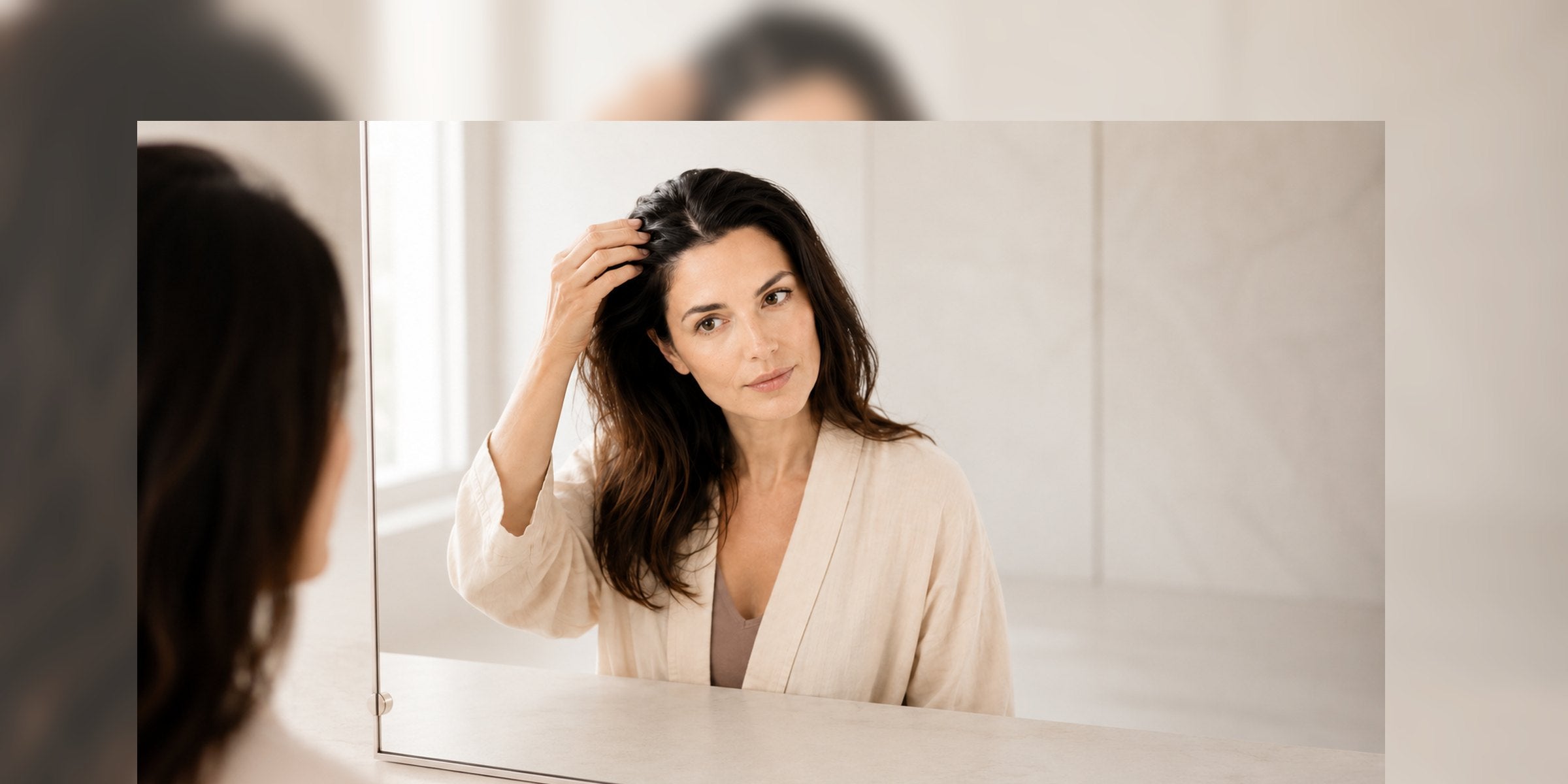
Can your menstrual cycle affect how your scalp reacts to hair dye?
Skin does not respond the same way every day. Neither does the scalp.
We are learning more and more about how certain factors can change the way the body responds to an allergen. Intense physical exercise, alcohol, some anti-inflammatories and stress have been described as possible cofactors that can intensify certain allergic reactions in predisposed people.
Now, a line of research at Hospital Clínic de Barcelona is focusing on a much less well-known cofactor: menstruation.
The hypothesis is especially relevant to women's health: the hormonal changes of the menstrual cycle could influence the immune response and cause some women, at certain points in the cycle, to react more strongly to certain allergens.
Although this research focuses mainly on food allergies, it raises an interesting question for skin and scalp care: do we pay enough attention to how our skin changes over the course of the cycle?
The scalp is skin too
When we talk about hair dyes, we usually think about colour, shine or grey coverage. But before all of that comes the scalp.
The scalp is an area of skin with a rich blood supply, hair follicles, sebaceous glands and a barrier that can be disrupted by many factors: hormonal changes, stress, frequent washing, heat, chemical treatments, previous dermatitis or individual sensitivity.
That is why some women notice more itching, tightness, flaking or discomfort at certain times of the month. It is not always a coincidence. Skin can be more reactive in some phases than others, especially in women prone to dermatitis, allergies, sensitive skin or with a history of reactions to cosmetic products.
Hair dyes and allergy: the role of PPD
Some permanent dyes, especially dark shades, may contain para-phenylenediamine, known as PPD, one of the most studied allergens in allergic contact dermatitis caused by hair dyes.
A reaction to hair dye does not always appear immediately. It can show up hours or days later with symptoms such as intense itching, redness, swelling, flaking or eczema on the scalp, forehead, ears, neck or eyelids. Less often, the reaction can be more severe and require medical attention.
That is why, if you have had a previous reaction to a hair dye, you should not dismiss it or think it "was just a bit of itching". Skin has immunological memory, and a sensitization can recur or get worse with new exposures.
So is it better not to dye your hair during your period?
We cannot say that menstruation causes hair dye allergy, or that all women should avoid colouring their hair on those days.
What we can say is that, if you have a history of sensitive skin, dermatitis, allergies, asthma or previous reactions to hair dyes, or you notice that your scalp is more reactive before or during your period, it makes sense to be more cautious.
On those days it may not be the best time to try a new dye, change your colour, have intense bleaching or combine several chemical treatments on your hair.
It is not about being afraid. It is about paying closer attention.
Warning signs before you dye your hair
Before applying a dye, it is worth checking the state of your scalp. If there is itching, stinging, sores, heavy flaking, irritation, increased sensitivity or a recent history of dermatitis, the most sensible thing is to postpone colouring and consult a professional.
You should also take extra care if you have had swelling of the eyelids, forehead, ears or neck after a previous colouring, as these areas are very commonly affected in allergic reactions to hair dyes.
And if you have ever had difficulty breathing, significant facial swelling, widespread hives or systemic symptoms after using a cosmetic product, it is essential to see a specialist before exposing yourself again.
A sensitivity test is no substitute for medical judgement
Many hair colour products recommend a sensitivity test before applying the dye. It is a useful measure, but it should not be seen as an absolute guarantee.
If a hair dye allergy is suspected, the proper assessment should be carried out by dermatology or allergy specialists using specific tests, such as epicutaneous tests or patch tests. These tests make it possible to identify sensitization to certain allergens, including PPD and other components related to hair dyes.
Beauty and the hormonal cycle: an overdue conversation
For years, the cosmetics industry has treated women's skin as if it were stable, uniform and predictable. But many women's experience says otherwise.
There are days when skin tolerates things better.
There are days when the scalp gets irritated more easily.
There are times when hair feels different.
And there are phases of the cycle when everything seems more sensitive.
Science is beginning to put a name to phenomena many women had already noticed. Menstruation, hormonal changes, stress and inflammation are not minor details: they are part of how skin responds.
Before you dye your hair, listen to your scalp
If your scalp is calm, free of irritation and with no history of reactions, dyeing your hair can be part of a normal cosmetic routine.
But if you are going through a more sensitive time, if your skin feels more reactive or if you have had a previous reaction, it may be wise to wait, seek advice and choose the moment with more care.
Caring for your hair is not just about choosing a good shampoo, a good mask or a good treatment. It is also about understanding the state of your scalp before putting it through chemical processes.
The scalp needs balance
And learning to listen to it is a smarter way to look after yourself.
Find out more:
On 19 June 2026, Hospital Clínic announced that menstruation can act as a cofactor that increases the severity of some food allergy reactions, although it remains a little-known and underdiagnosed phenomenon. https://www.clinicbarcelona.org/noticias/una-realidad-desconocida-cuando-la-menstruacion-empeora-la-alergia-alimentaria?utm_source=chatgpt.com
The literature on food anaphylaxis notes that cofactors can lower the reaction threshold or increase its severity; among the most frequently described are exercise, infections, NSAIDs, alcohol and stress. https://pmc.ncbi.nlm.nih.gov/articles/PMC8342881/?utm_source=chatgpt.com
In hair dyes, PPD is widely described as a significant cause of allergic contact dermatitis, and the patch test is considered the reference method for confirming PPD allergy. https://pmc.ncbi.nlm.nih.gov/articles/PMC5261844/?utm_source=chatgpt.com
Leave a comment
This site is protected by hCaptcha and the hCaptcha Privacy Policy and Terms of Service apply.