

How to Care for Your Scalp and Hair After Dyeing: A Professional Guide
Colouring your hair is a way to refresh your look and enhance your features. Women and men alike feel more attractive when they change their hair colour. However, regular colouring can compromise the health of the scalp and the integrity of the hair fibre, leaving it more vulnerable to external aggressors.
To enjoy soft, luminous coloured hair and keep the colour looking its best for longer, it is essential to follow a suitable care routine from the very first wash at home after colouring.
Types of hair dye and their impact on hair
There are different types of hair colour on the market: permanent, semi-permanent, temporary, plant-based, metallic... and each one acts differently on the hair fibre.
In this guide we will focus on the three most widely used types of hair colour today:
- Permanent dyes. These dyes modify the inner structure of the hair to fix the colour.
- Semi-permanent dyes. These dyes act on the surface of the fibre, on the cuticle, adding colour without deeply altering the hair structure.
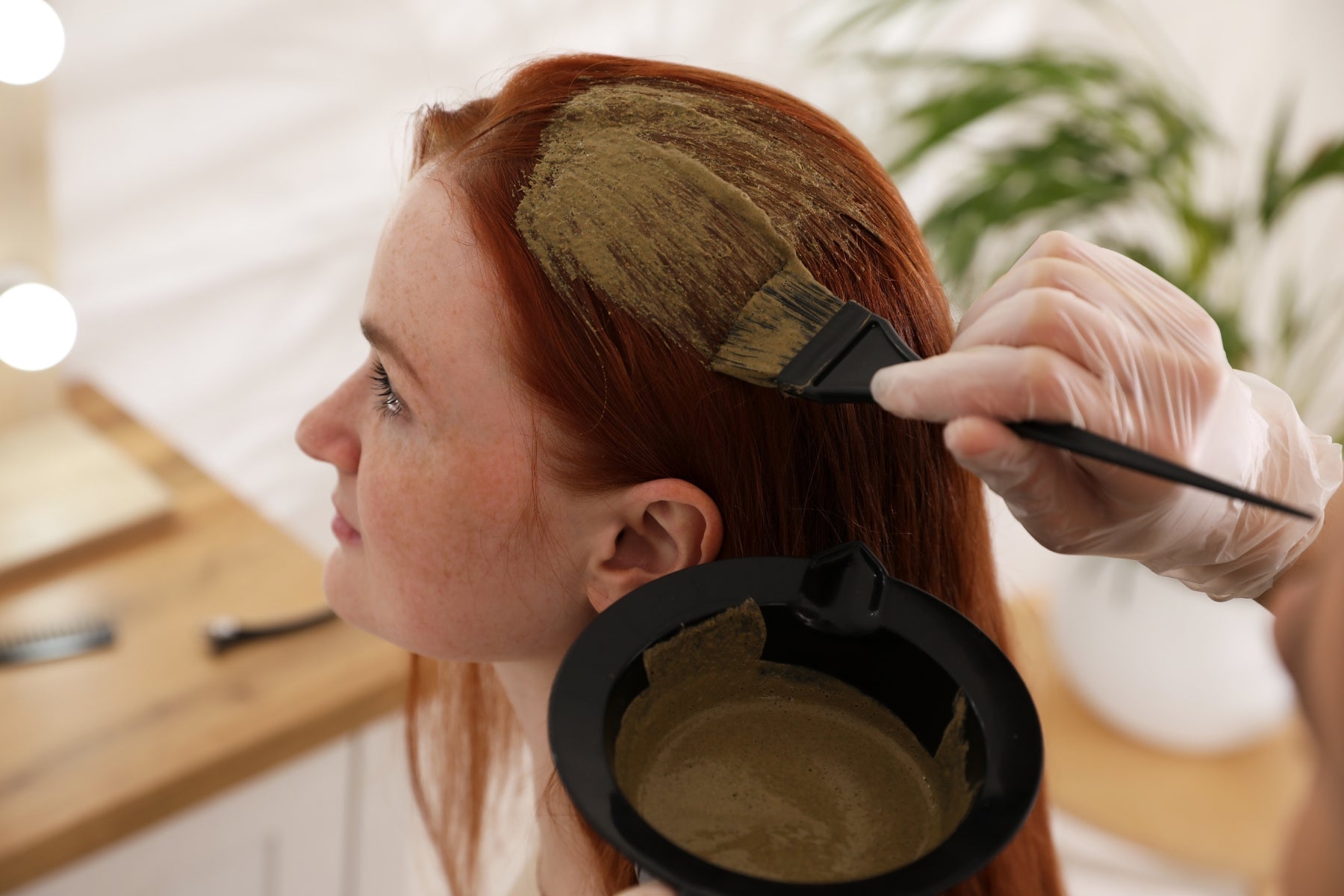
- Natural colour: clay colours. In this type of colouring, carefully selected plant powders are mixed with hot water. As it does not penetrate the inner structure of the hair, it gradually washes out.
Understanding how dyes work and what effects they have on your hair is the first step to caring for it properly after colouring.

What effects do permanent and semi-permanent dyes have on hair?
Effects of permanent colour on hair
The chemicals in permanent dyes, such as PPD (p-phenylenediamine) or PTD (p-toluenediamine), work by opening the hair cuticle to deposit the colour in the cortex, which weakens the fibre and can cause sensitization of the scalp.
The most common effects include:
- Dryness and irritation of the scalp: the chemicals can dry out the skin of the scalp, making it more sensitive and irritated.
- Brittle, dull hair: breaking open the hair fibre to place the colour makes hair more fragile and prone to frizz.
- Risk of allergies: although modern dyes do not pose a significant risk to human health under normal conditions of use, contact allergies can occur, especially with permanent colour changes using p-phenylenediamine, p-toluenediamine or p-aminophenol, which is why an allergy test is advisable.
Effects of semi-permanent colour on hair
Unlike permanent dyes, semi-permanent colour does not reach the cortex, the innermost structure of the hair. Its pigments are deposited on the outer cuticle, which allows it to add colour without significantly altering the hair fibre.
Advantages:
- No harsh oxidizing agents.
- It is less likely to cause allergies or sensitization.
- Ideal for temporary changes of look or for enhancing existing shades.
Disadvantages:
- Shorter-lasting. Because it sits on the cuticle, the colour fades with each wash, even more so if the hair is porous or dehydrated.
- Greater need for care after application. At Modesta Cassinello we don't see this as a disadvantage, because caring for your hair is the best way to keep it the way you like it, and with a good ritual tailored to your needs it doesn't take that much time.
What effects does natural colour, with clay colours, have on hair?
Clay colour is a plant-based alternative for colouring your hair that uses powders from dye plants such as henna, indigo and cassia... Mixed with hot water, they form a paste that is applied to the hair. Sometimes the desired shade is not achieved and it needs to be toned to remove unwanted hues. Unlike the conventional dyes mentioned above, it contains no ammonia, peroxides or PPD, making it a very good option for people with a sensitive scalp.
As this type of colour coats and fills the hair fibre, the hair thickens and feels denser. Maintenance is important because the deposited pigments wash out more easily. You should also bear in mind that prolonged exposure to UV radiation changes the colour.
Post-colour care: how to prolong colour and hair health
Once you have coloured your hair, it needs special attention at home. Here are our expert tips for caring for coloured hair and keeping the scalp in balance.
1. Deep hydration
Coloured hair tends to be drier, so it is very important to deeply nourish and hydrate both the scalp and the hair fibre with every wash. Use nourishing ingredients such as ceramides and postbiotics to soothe the scalp.
2. Wash with lukewarm water, not hot
Hot water opens the hair cuticle, speeding up colour loss. Choose lukewarm water and finish with a cold rinse to close the cuticle scales, prolonging the intensity of the colour.
3. Avoid excessive heat
Limit the use of heat tools such as hairdryers, straighteners and curling tongs at high temperatures. Direct heat can weaken coloured hair even further.
4. Sun and environmental protection
UV rays and pollution can oxidize colour and damage hair. For prolonged exposure, use products with active ingredients that protect against UV radiation and the heat of straighteners and hairdryers, as well as antioxidants for everyday protection.
The Modesta Cassinello range: expert formulas for coloured hair
If you are looking for products that care for both the scalp and the hair fibre after colouring, the Modesta Cassinello hair care line is your ally. This dermopharmaceutical line has been carefully formulated with innovative ingredients and actives that respect the health of the scalp and enhance and prolong the beauty of coloured hair.
Recommended products:
- H02 Repairing Shampoo: a shampoo that cleanses gently without disrupting the skin barrier and strengthens the hair fibre. Ideal for a sensitive scalp after colouring.
- H09 Nourishing Hair Mask: an intensive treatment with biomimetic ceramides, lipids and light emollients for dry, dull or damaged hair.
- H10 Sublime Oil: a multi-purpose oil that provides intensive nourishment, seals the ends and protects hair from external aggressors. It enhances colour and prevents it from oxidizing.
At Modesta Cassinello, all our products are formulated with gentle cleansing agents, free from harsh sulphates, that not only care for your hair but also protect and soothe the scalp. They are also suitable for frequent use.

Conclusion
Caring for your hair after colouring is not optional, it is essential. A care routine or ritual that hydrates, nourishes and protects the scalp and hair, together with products designed specifically for coloured hair such as those by Modesta Cassinello, will help you enjoy longer-lasting colour and visibly more beautiful hair.
Would you like more tips or to discover the ideal routine for your coloured hair?
Visit our blog at modestacassinello.com for our personalized recommendations.
Frequently asked questions about caring for coloured hair (FAQ)
How should I care for my hair after colouring it?
After colouring your hair, it is essential to use products that soothe the scalp and hydrate, nourish and protect the hair. We also recommend avoiding direct sun, excessive heat and very hot water, and using nourishing and restructuring masks as well as conditioner when you wash your hair.
Which products are good for coloured hair?
Cosmetics with ceramides, postbiotics, amino acids, hydrolysed proteins and plant oils are ideal: shampoos that are effective yet gentle on the scalp and hair, conditioners, masks and oils that soothe the scalp and help maintain the colour and beauty of your hair.
How long should I wait to wash my hair after colouring?
You can wash it whenever you like, even the same day. Once the hair has been coloured, dried and styled, the treatment is complete.
How can I prevent hair dye from damaging my scalp?
To find out whether you have any kind of allergy and avoid damage to the scalp, it is advisable to do an allergy test beforehand on the inside of your wrist. If you have a sensitive scalp, we recommend avoiding harsh dyes and, after colouring, using soothing and repairing products to care for your scalp and hair.
Does the sun affect coloured hair?
Yes, sun exposure oxidizes the colour and dries out the hair. Using UV-protective products to prevent the colour and the hair fibre from deteriorating is essential.
Can I use a mask on the same day I colour my hair?
Yes, there is no problem washing your hair on the same day you colour it and using a mask after washing to restructure and protect it.
How often should I wash coloured hair?
You should wash your hair whenever you need to, whether it is coloured or not. Washing is about cleansing the scalp: an imbalance caused by excess oil or pollution can disrupt the skin microbiome (the bacteria, viruses and mites that live on the scalp) and cause irritation and itching.
What is the difference between henna and clay colours for hair?
Henna is one specific plant with a reddish pigment, whereas clay colours are blends of several dye plants such as henna, indigo, cassia or amla. Clay colours make it easier to adjust the tone and match the shade of hair you want.
How long does clay colour last on hair?
How long clay colour lasts depends on how often you wash your hair, your hair type, its porosity and the products you use in your care routine.
Do clay colours cover grey hair?
Clay colours do not offer full coverage of grey hair like a permanent dye, but they can blend it and give it a warmer tone or reflect, depending on the blend of plants used.

Every article is backed by the expertise of Dr Modesta, pharmacist and founder, committed to excellence in hair care.
Leave a comment
This site is protected by hCaptcha and the hCaptcha Privacy Policy and Terms of Service apply.