

Shampoo for Oily Hair: How to Choose Wisely and Care for Your Scalp
Having oily hair is one of the most common concerns for both men and women. Many people look for shampoos that "eliminate oil," but the truth is that the goal should not be to completely remove sebum, but rather to regulate it and maintain scalp balance.
In this article, you will discover:
- Why hair gets oily.
- What to look for (and what to avoid) in a shampoo for oily hair.
- Our selection of recommended products.
- How to adapt your hair care routine to maintain a healthy scalp.
- Answers to frequently asked questions about oily hair care.
Why hair gets oily: most common causes
Just 4 mm below the surface of the scalp is the hair follicle, where hair originates. Attached to each follicle is the sebaceous gland, responsible for producing sebum, a mixture of natural lipids whose function is to:
- Protect the skin barrier.
- Lubricate the hair fiber to provide shine and flexibility.
- Defend the scalp against external aggressions (bacteria, pollution, UV radiation).
However, excessive sebum production can make hair look dirty, heavy, and greasy, even a few hours after washing.
Furthermore, if not washed frequently enough, this excess oil can encourage the proliferation of the Malassezia fungus, leading to itching, irritation, and even flaking on the scalp.

Factors that increase sebum production:
- Genetics: some people have larger or overactive sebaceous glands.
- Hormones: Androgens (like testosterone) stimulate the sebaceous glands.
- In women, during adolescence, certain phases of the menstrual cycle, or menopause, hormonal imbalance can make hair oiliness more noticeable.
- Stress: cortisol can alter the function of the sebaceous glands.
- Climate: heat and humidity increase sebum fluidity.
- Cosmetic habits: the use of very aggressive products or, on the contrary, the accumulation of residues from unsuitable products.
- Niacinamide (Vitamin B3): Strengthens the scalp's barrier function, helps reduce inflammation, and has a gentle sebum-regulating effect. Additionally, it can help reduce redness or discomfort associated with excess oil.
- Sea salt: Thanks to its hygroscopic capacity, it helps absorb excess oil and provides a refreshing and purifying sensation. It can also contribute to gentle exfoliation, removing dead cells and residues.
- Botanical extracts like nettle, burdock, or sage: Possess astringent, antimicrobial, and sebum-regulating properties. They also help soothe possible irritations and lighten the scalp.
- Zinc PCA: An ingredient with recognized efficacy in limiting sebaceous activity and preventing bacterial proliferation. It also helps maintain the balance of the skin microbiota.
- Peppermint essential oil (Mentha piperita): Provides an intense feeling of freshness and helps prolong the sensation of cleanliness, although it does not directly act on sebum production. Its toning effect and mild antimicrobial power make it an ally for oily hair, provided an appropriate formulation is used to avoid irritation.
- Panthenol (Provitamin B5): Penetrates the hair fiber, retains water, and provides elasticity and shine.
- Glycerin: acts as a humectant, helping to attract and retain moisture in the hair.
- Saccharide Isomerate: A plant-derived polysaccharide with high affinity for keratin, it provides prolonged hydration even after rinsing.
- Low molecular weight hyaluronic acid: Helps maintain hydration in both the scalp and the hair fiber, without adding weight or a greasy feeling.
- Helps keep the skin barrier intact.
- Promotes microbiome balance.
- Reduces cuticle lifting, improving shine and softness.
- Alter the barrier function.
- Increase sebum production as a defense mechanism.
- Leave hair more porous and rough to the touch.
- Alter the skin barrier.
- Increase the porosity of the hair fiber.
- Promote greater sebaceous production as a defense mechanism.
- Cause loss of shine and softness.
- Excessive and aggressive washing. Excessively and continuously removing sebum can unbalance the scalp's microbiome and cause itching and irritation.
- Heavy silicones or dense oils at the root. These can leave a greasy feeling and clog the follicle.
- Water that is too hot. Stimulates the sebaceous glands.
- Applying masks or oils not formulated for the scalp to the roots can make hair greasy. Check the instructions.
- Constantly touching your hair makes it dirty easily.
-
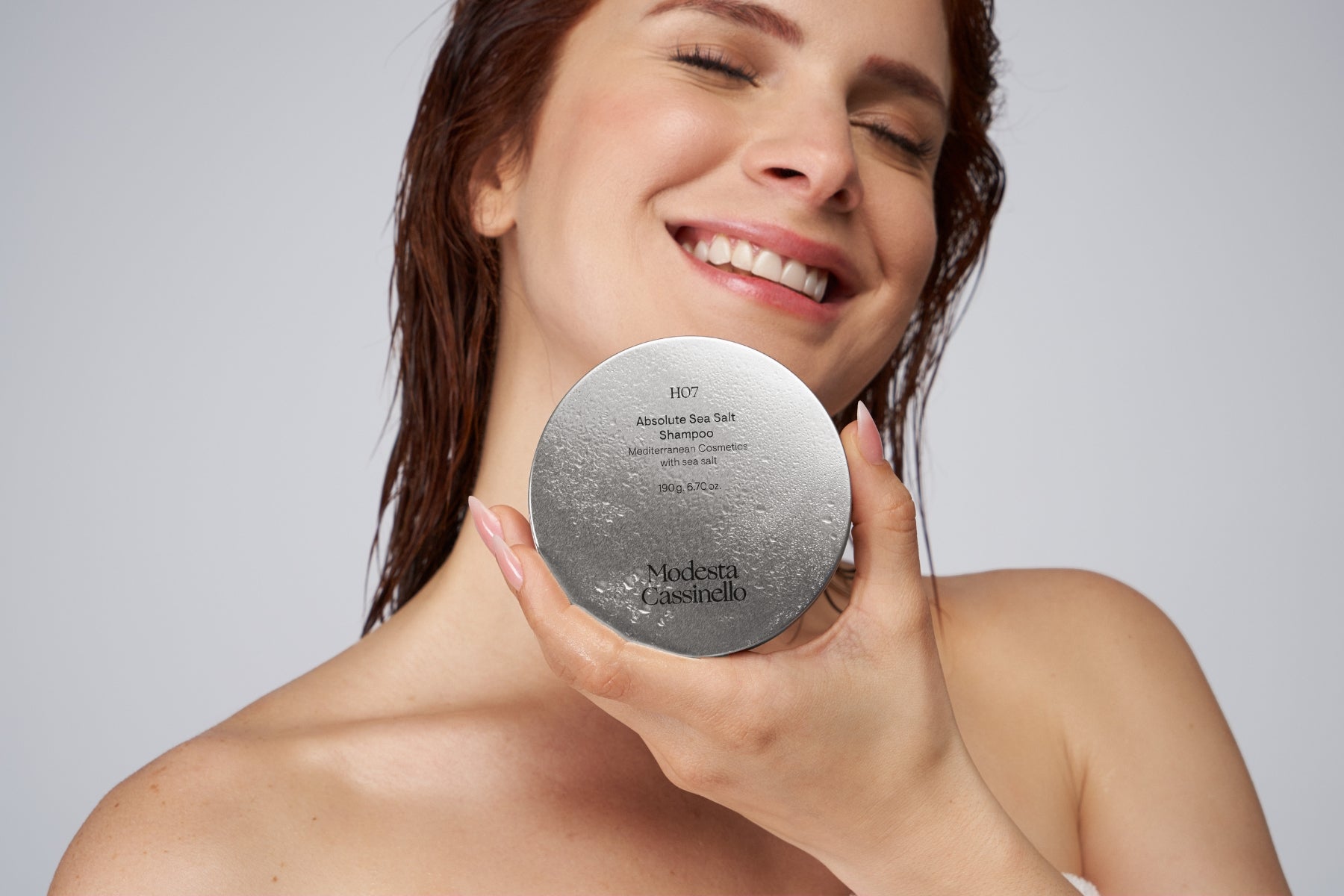
H07 Sea Salt Shampoo. Innovative and unique, this cleansing treatment effectively removes traces of grease, dirt, styling products, and environmental pollution. This shampoo creates a good amount of foam at the root, ensuring effective cleansing and aiding in thorough rinsing.
H07 Sea Salt Shampoo offers a unique feeling of well-being on the scalp and softer, cleaner hair for longer. Ideal for use 1-2 times a week for oily hair.
H01 Daily Use Shampoo. A shampoo specially formulated for frequent cleansing of the scalp and hair. It contains medium cleansing agents that ensure effective cleansing, respecting the physiology of the scalp and hair, as well as active ingredients like niacinamide, aloe vera, and glycerin. It provides light hydration and respects the scalp's physiology.
Perfect to alternate with H07 Sea Salt Shampoo treatment.H05 Solid Shampoo. This shampoo, made with coconut oil derivatives, achieves effective and respectful cleansing of the scalp and hair. Its content of aloe vera and saccharide isomerate, active ingredients with proven properties for the hair fiber, leave hair hydrated and revitalized without weighing it down.
Like the previous one, it is perfect for oily hair alongside H07 Sea Salt Shampoo.- More oil or heavy feeling. Opt for a deeper yet respectful cleansing with H07 Sea Salt Shampoo.
- Less oil or sensitive scalp. Use H01 Daily Use Shampoo or H05 Solid Shampoo. Always alternate both types of shampoo to avoid irritation and maintain balance.
Interesting fact: Studies in trichology have shown that finer or straighter hair tends to look greasy sooner, because sebum distributes more easily along the hair fiber. (Source: Draelos ZD, Cosmetic Dermatology).
What to look for (and what to avoid) in a shampoo for oily hair
The goal in caring for oily hair is not to completely eliminate sebum, but to keep the scalp balanced to preserve the follicular environment in the best conditions for hair growth.
Recommended ingredients in shampoos for oily hair:
1. Alternate shampoos according to the level of cleansing you need
To keep an oily scalp balanced, it is advisable to alternate between gentle cleansing shampoos, based on surfactants like cocamidopropyl betaine or sulfosuccinates, and formulas with more detergent surfactants like SLES, which help remove grease, pollution, or styling product residues when a deeper clean is required.
2. Sebum-regulating and purifying active ingredients
For oily hair care, it is key to include sebum-regulating and purifying ingredients that help limit visible excess sebum, purify the scalp, and maintain a fresh feeling, without altering the skin barrier or causing irritation.
Although cosmetics cannot "regulate" sebaceous production physiologically, they do contribute to managing its excess and improving scalp comfort. Some effective active ingredients are:

3. Balanced hydration
Although the roots tend to produce more oil, the mid-lengths and ends of the hair can be dehydrated, especially in long, curly, or chemically treated hair (dyes, bleaches, straightening treatments).
This happens because sebum does not easily reach the lengths of the hair, and also, frequent washing and the use of purifying shampoos can strip away some of the natural lipids from the hair fiber.
To prevent hair from looking rough, dull, or brittle, it is essential to provide light hydration that does not weigh it down or make it greasy. Some excellent active ingredients for hydrating without weighing down are:
These ingredients allow you to care for oily hair without sacrificing the health and beauty of the lengths, achieving an optimal balance between cleansing and nourishment.
4. Balanced pH (4.5-5.5)
Another key aspect of oily hair care is the pH of the shampoo. Ideally, opt for formulas with a slightly acidic pH (between 4.5 and 5.5), similar to the natural pH of the scalp.
An acidic pH:
In contrast, shampoos with an alkaline pH can:
An inadequate shampoo pH is one of the most common causes of irritation in oily and sensitive scalps.
It is important to know that many children's shampoos are formulated with a pH close to 7 (neutral) to minimize eye irritation and prevent stinging if the product comes into contact with the eyes during bathing for toddlers. However, this neutral pH is not the most suitable for the adult scalp, especially if the hair is colored or has structural damage.
For colored, sensitized, or oily-prone hair, using shampoos with a neutral or alkaline pH can:
Therefore, if you have colored, damaged, or an oily and sensitive scalp, it is preferable to choose shampoos with a slightly acidic pH (4.5-5.5), which help maintain scalp health and hair fiber integrity.
Ingredients or habits to avoid for oily hair
If you want to read more information on our blog about how to effectively treat oily scalp.
Our selection of products for oily hair
Before recommending a product for oily hair, it's important to clarify that every scalp is unique. The key to success is to observe its condition and adapt the routine according to current needs.
Deep and respectful cleansing
Cleansing with medium and effective agents
Choose the most suitable product according to your scalp condition
Before washing your hair, observe how your scalp is:

Recommended routine: how to care for oily hair daily
We recommend using H07 Sea Salt Shampoo 1-2 times a week for a deeper cleanse. On other days when hair needs washing, we recommend using H01 Daily Use Shampoo or H05 Solid Shampoo for a balanced cleanse.
Remember that oil adhering to hair reduces volume, so instead of avoiding conditioner for fear of losing volume, effectively remove the oil as frequently as needed. Finish by smoothing the mid-lengths and ends with a conditioner like H04 Conditioner, which softens and protects without reducing volume, especially if you have long hair.
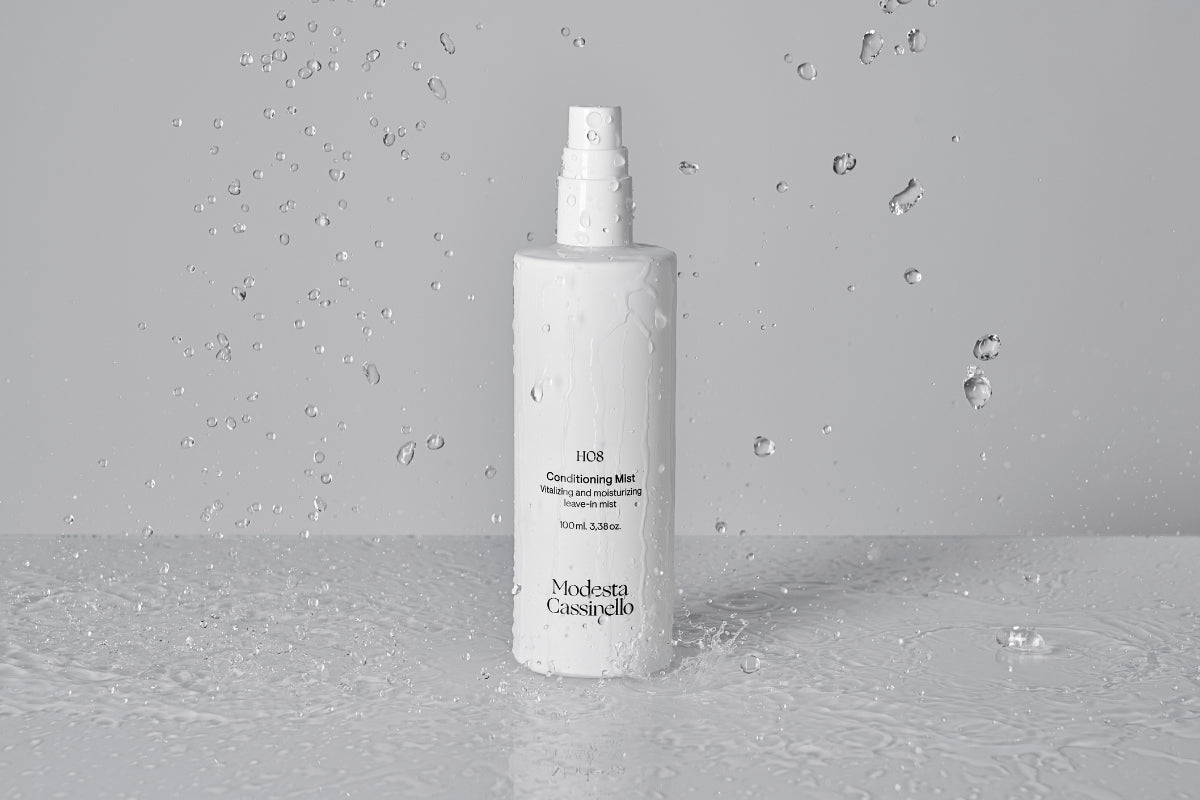
For short or fine hair, or in cases of thinning hair, condition outside the shower with H08 Leave-in Conditioner Spray, an extra layer of softness, protection, and shine that doesn't weigh hair down or make it dirty sooner.
Very important: Avoid leaving greasy products on the roots.
Frequently asked questions about shampoo use for oily hair
How often should oily hair be washed?
It depends on each person, but in general, oily hair can be washed daily if gentle and scalp-friendly formulas are used, but it is advisable to alternate a deeper cleansing shampoo with a milder cleansing shampoo.
Can I use conditioner if I have oily hair?
Yes, as long as it is applied only to the mid-lengths and ends. Avoiding the roots is key. The right conditioner hydrates without adding weight or increasing sebum production.
What ingredients help balance oily scalp?
Niacinamide, sea salt, zinc PCA, botanical extracts, and peppermint essential oil can help treat oily scalp.
Are sea salt shampoos aggressive for hair?
Not necessarily. If well formulated, like Modesta Cassinello's H07, they cleanse deeply without drying or irritating.
Can more than one shampoo be alternated in the routine?
Yes, combining a deep cleansing shampoo with a daily use one is an effective strategy to keep the scalp balanced long-term.
Choosing the ideal shampoo for oily hair does not mean using aggressive formulas that strip away sebum, but rather opting for ingredients that regulate sebaceous production and protect the skin barrier. Combining deep and gentle cleansing, along with specific care, is the key to healthy, clean, and bouncy hair.
“A balanced scalp is the foundation of beautiful hair.”

Each article is backed by the expertise of our founder and CEO Dr. Modesta Cassinello, Doctor of Pharmacy and Diplomate in Nutrition, committed to excellence in skin and hair care.
Leave a comment
This site is protected by hCaptcha and the hCaptcha Privacy Policy and Terms of Service apply.