

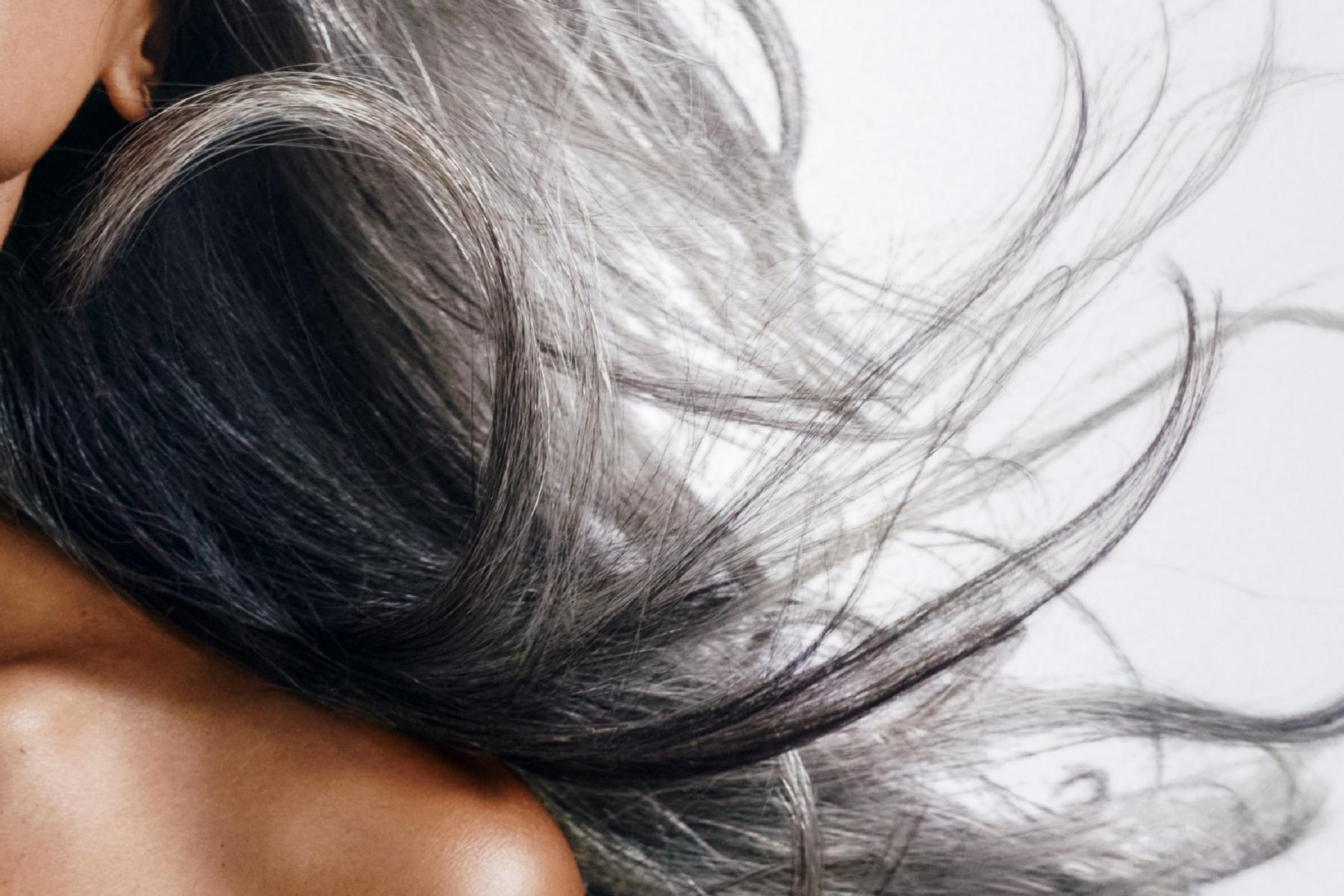
First Grey Hairs: Causes and Solutions
If you've spotted your first grey hairs, remember: there's no need to worry, just to take action and give them the best care. Although grey hair is part of the natural process of getting older, today it is not necessarily associated with old age.
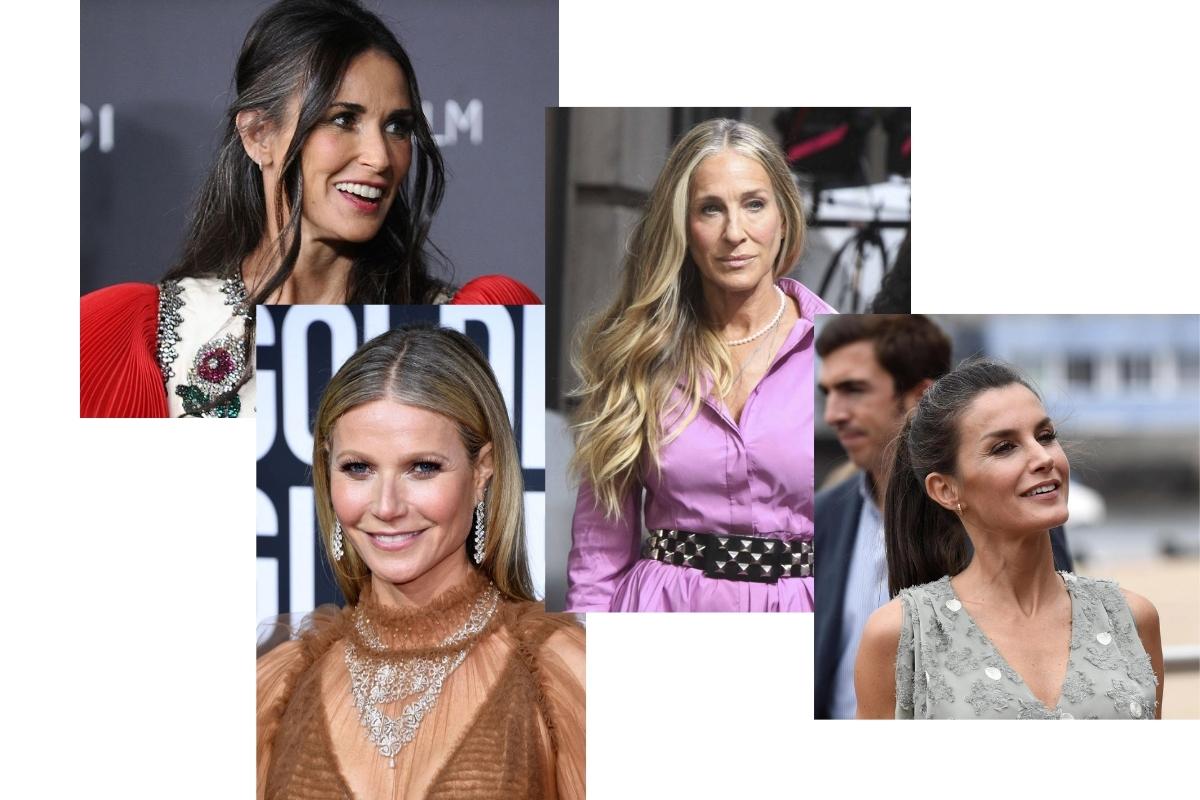
Many women proudly wear their grey hair at any age: think of Queen Letizia, Ángela Molina, Sarah Jessica Parker, Caroline of Monaco... All of them have embraced "Grey Blending", which is simply letting your grey hair show with style.
At Modesta Cassinello, when the first grey hairs appear, we always focus on the hair itself, improving its qualities. That way, if you choose to keep them, your grey hairs become softer and blend in with the rest of your hair. If, on the other hand, you prefer to colour your hair, you'll enjoy hair with all the qualities we always love to see: softness, shine and manageability, as well as better results with the shade you choose.
Since you've sent us so many questions when you notice your first grey hairs, today we've gathered them all together, answered them and shared them with you. We encourage you to learn all about the care you need.
Why does grey hair appear?
Grey hair is a phenomenon linked to ageing and one of its most obvious signs. After 10 hair growth cycles (at around 40 years of age), the hair follicle changes: the pigment-producing potential of the hair roots becomes exhausted, leading to the production of white hairs.
The loss of the pigment called melanin, due to the reduced activity of the follicle's melanocytes, causes greying and also alters the hygroscopic nature of the hair. This change affects its ability to absorb moisture and its affinity for metals. That's why frizz increases while softness and shine are lost.
Although genetics are decisive, vitamin and mineral deficiencies, together with the oxidative stress caused by factors such as the sun and exposure to chemicals, contribute to hair losing pigment and grey hairs appearing. As we age, our body uses nutrients less efficiently, which is why we need to look after our diet and consider supplementation at times of deficiency.
Oxidative stress is one of the main causes of cellular stress, which can lead not only to signs of ageing but also to greying hair.
"A grey hair is a transparent hair, not a white one. Using cosmetics that don't add colour to the fibre is important." Modesta
What are the main challenges of grey hair?
To fully understand the challenges grey hair faces (frizz, loss of shine, more fragile hair...), we need to know the different processes that take place and understand that they can't be attributed solely to a loss of melanin in the hair. There are other interesting factors, which I'll describe below.
- Grey hair is externally more resistant. Yes, keratinocytes begin to occupy the spaces left by melanocytes. This means there is more keratin and the hair is more resistant.
- Grey hair falls out less. Grey hair delays its shedding. When a hair enters the shedding phase (telogen phase), the immune system steps in: lymphocytes arrive and speed up the telogen phase. When hair turns grey, the lymphocytes get "confused": they are programmed to act on coloured hair, and the absence of colour confuses them, so they delay shedding.
- Cellular resistance. Biologically speaking, when one type of cell disappears from a tissue, the others become more resistant. In this case, it seems that when melanocytes are lost, the hair follicle makes the keratinocyte more resistant and longer-lived. Although this hasn't been proven, it is a hypothesis held by biologists.
- When hair turns grey, there is an alteration in the lipid fraction of the hair, both in quantity and in its arrangement within the hair fibre. The cuticle lipids of grey hair decrease compared with pigmented hair. As a result, grey hair changes its hygroscopic nature and its affinity for metals compared with naturally pigmented hair fibres, affecting shine, frizz and fragility.
Can we delay grey hair?
To delay grey hair, you need to lead a healthy lifestyle that includes a good diet; we've already seen how vitamin and mineral deficiencies can contribute to greying. And as with any healthy lifestyle, diet should go hand in hand with good stress management, proper rest and physical exercise. Remember to avoid tobacco and excess alcohol since, as well as ageing the hair, they can predispose it to fall out.
You can also act with products that activate tyrosinase, products that help the pigment merge and, of course, by keeping the hair follicle in good condition.
Once hair has turned white, and beyond a certain age, this cannot be reversed. These products are intended for young people and require daily application.
What we can do is lead a healthy lifestyle and manage stress well, as it is one of the most important triggers. At the same time, avoid tobacco and alcohol since, as well as ageing the hair, they can predispose it to fall out.
Does grey hair need different care from normal hair?
I recommend using a shampoo suited to your hair type and needs, with active ingredients with proven properties that soften the hair fibre and make it more even. And since grey hair takes on a yellowish tone when exposed to a lot of sun, chlorine or even the minerals in water, check that your products don't add pigment to your hair, and use a shampoo or concentrate with violet pigments: it will neutralize those unwanted tones.
This toning shampoo should only be applied to the area where you notice the unwanted colour, which will mainly be from mid-lengths to ends. Using it on all your hair can tint it with unwanted bluish tones.
Grey hair tends to be coarser and more unruly and, like any other hair, it needs protecting. Grey hair suffers from external aggressors, whether environmental (sun, pollution...), mechanical (brushing, straightening...) or chemical (colouring...), which is why caring for it is key to keeping it looking healthy and beautiful.
A few tips for healthy, beautiful grey hair:
- Use cosmetics that cleanse effectively and gently for both scalp and hair. Keep our H02 Repairing Shampoo to hand, together with a conditioner or mask such as H04 Conditioner or H09 Mask, and you'll restore the softness, shine and alignment of the hair fibre. Remember to leave it on for the time recommended by the manufacturer, and if you comb your hair while applying conditioner, use a comb or brush designed for this; otherwise you'll drag the product away with the first stroke and waste it.
- Pamper your hair. Grey hair is prone to breakage. Pamper it, especially when it's wet, when the cuticle is swollen and more vulnerable. H08 Leave-in Conditioning Spray and H10 Sublime Oil will be your allies; you can use them on damp hair but also on dry hair.
- Massage it. Brush and massage your hair, but very gently, especially on the top of your head, as this area has less structural support and reduced mechanical resistance. Rather than handling this area roughly, lift it with gentle movements.
- Use a violet toning shampoo. Once a week, a shampoo with blue-violet pigment can help neutralize unflattering yellowish tones.
Fun facts about grey hair
Three facts about grey hair you might not know.
- Men are more prone to baldness than women, and people of African descent have the lowest incidence, because their melanocytes have a greater capacity to synthesize tyrosinase.
- Oxidative stress in the melanocyte caused by repeated technical treatments leads to its exhaustion.
- Grey hair always starts at the temples, whereas baldness always starts on the top of the head, which is why an inverse mechanism between greying and baldness has been proposed.
- If you pull out a grey hair, another grey hair will grow back, until the follicle is exhausted since, as mentioned above, it doesn't have an indefinite growth cycle.
- Alopecia is not related to the appearance of grey hair.
Have you thought about going grey? Are we, as @magdalenafrag says in Marie Claire magazine, facing a new white revolution? If so, we're here to help you hit the mark ;)
I look forward to hearing your comments. Warm regards, Modesta.
Leave a comment
This site is protected by hCaptcha and the hCaptcha Privacy Policy and Terms of Service apply.