

Rosemary isn't magic: the real cost of delaying diagnosis for hair loss
Rosemary is not magic. And on this topic, I will not deviate from what science truly supports and what works in clinical practice.
Every week I hear the same thing, and more and more often: "I saw on Instagram that rosemary oil works for hair loss, so I've been trying it for a while." I perfectly understand the impulse: when something goes viral, it seems simple, accessible, and "natural."
If you're interested in "viral" oils, you might find this other article about castor oil useful: how long it makes sense to leave it on your hair and what expectations should be adjusted. Because in hair care, often, the decisive factor is not the ingredient, but discernment..., and time.
But in hair health, there's a reality that is rarely mentioned: time counts. And in some types of hair loss, especially androgenetic alopecia, delaying effective intervention can mean losing valuable months to slow down the process and recover density with better results.
This post is not to demonize rosemary. It is to help you make an intelligent decision: when it can be beneficial as an adjuvant and when it's best not to waste time and consult a specialist for effective action.
What's happening
Social media has done something positive: talking about hair loss without taboo. The problem arises when the algorithm turns an idea into a promise.
If you're interested in another much-discussed topic on social media, where evidence is also important, here's this article: "Creatine and hair loss: what the evidence says and what to do".
In consultations and also in customer service, a very clear pattern is repeated: people start with a viral "remedy," they give it too much time without evaluation criteria, hair loss continues or hair thins, and by the time they ask for help, 8-16 weeks or more have passed.
In hair health, that time is not indifferent: in certain types of alopecia, it can change the prognosis.

In hair loss, time is part of the treatment
Here's the key: not all hair loss is the same.
If you want a clear basis for guidance, here is this clear guide: Why hair falls out: frequent causes and how to distinguish them
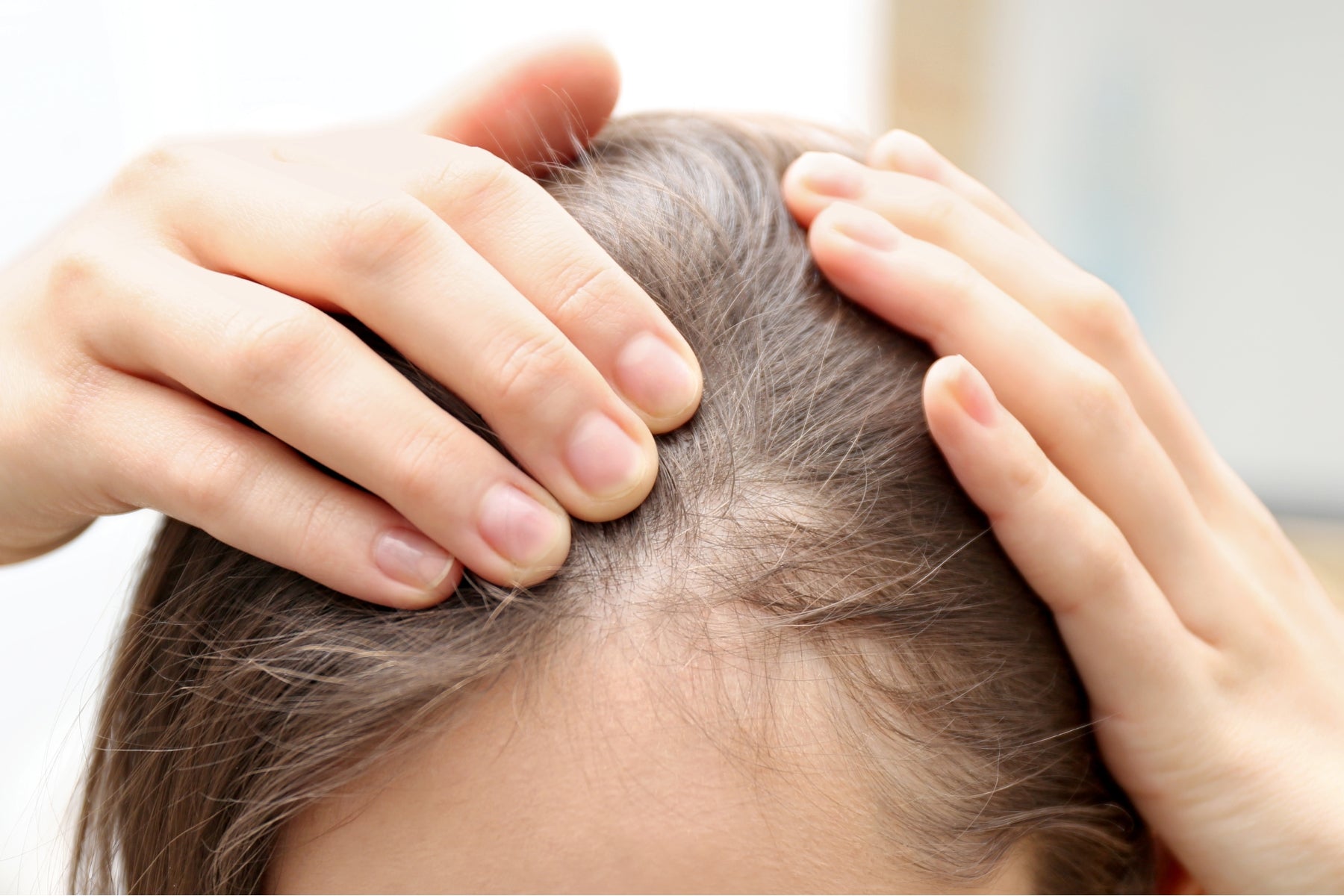
- Androgenetic alopecia. It's not "shedding" in the classical sense. It's a process of progressive miniaturization of the follicle: the hair becomes thinner, shorter, and more fragile, and the cycle is altered. In this context, the biggest cost of "trying things" without criteria is losing the window of intervention. The sooner action is taken with strategies that have better evidence to stop the process, the better.
- Telogen effluvium (diffuse hair loss). Usually appears after a trigger: sustained stress, fever, postpartum, weight loss, nutritional deficiencies, surgeries, etc. Here the correct approach is not to "stimulate for stimulation's sake," but to identify the trigger, normalize habits, and support with a routine that does not irritate the scalp.
- Scalp inflammation or disease. Seborrheic dermatitis, psoriasis, eczema, folliculitis... In these cases, adding treatments without a diagnosis can worsen the condition due to irritation or simply by not treating the real cause.
Therefore, before deciding "rosemary yes or no," you need to know what type of hair loss you have and what your scalp condition is.
What does science really say about rosemary?
Evidence for rosemary oil in hair loss exists, but it is limited and requires nuances.
It may play a role as an adjuvant in certain scenarios, but it should not be presented as a universal substitute for strategies with stronger evidence, especially in androgenetic alopecia, and its use should prioritize tolerance: if it irritates, it ceases to be helpful.
In hair care, success is not achieved by doing "more things," but by doing the right things, for long enough, and without inflaming the scalp.
Checklist: Am I wasting time?
Save it or send it to yourself. If you recognize yourself in several of these points, it is most prudent to make an appointment with dermatology/trichology to confirm diagnosis and act in time.
Signs that warrant a consultation:
- Your part looks wider or you notice less density on your crown.
- Your hair feels thinner with each passing week.
- Your receding hairline is advancing or your frontal line is receding.
- Hair loss persists for more than 8-12 weeks without clear improvement.
- You have a family history of androgenetic alopecia.
- There is persistent itching, flaking, or repeated flare-ups.
- You feel a burning sensation or pain in your scalp (trichodynia).
- You've had a recent trigger (intense stress, fever, postpartum, weight loss, surgery) and the hair loss doesn't subside.
In hair health, the goal is not to do more: it is to do the right thing at the right time.

If you are using rosemary or any viral "remedy", put it in a clinical framework
The critical point is not the ingredient. It's time.
If there's a suspicion of androgenetic alopecia or persistent hair loss, delaying an adequate evaluation can reduce options and effectiveness.
If you notice progressive thinning, an advancing hairline, sustained hair loss for more than 8-12 weeks, or a family history, my recommendation is to prioritize a consultation with dermatology/trichology to confirm the diagnosis and act as soon as possible with an evidence-based strategy.
And if there is also persistent itching or flaking, it is advisable to rule out scalp pathology before adding more products or treatments.
What to expect in a first hair assessment?
Going to a specialist means putting a name to what's happening and making informed decisions. In a first assessment, the usual procedure is:
- Directed clinical history: when it started, pattern, recent changes, family history, habits, stress, medication.
- Examination of the scalp and hair fiber: signs of miniaturization, inflammation, flaking, sensitivity.
- Complementary tests if applicable: trichoscopy and, in some cases, blood tests to rule out relevant deficiencies.
- Realistic plan: what to do now, what to expect in 8-12 weeks, and what indicators to use to evaluate progress.
Diagnostic clarity avoids the loop of "trying things" without direction.
The idea I want you to take away
The debate is not natural vs. clinical. It's discernment vs. wasted time.
You can use rosemary if you feel like it and tolerate it. But if there is sustained hair loss, thinning, or suspected androgenetic alopecia, the smartest thing to do is not to postpone a visit to your dermatologist to assess your case and prescribe an effective plan.
Because in hair care, often, what is lost is not just hair: it is opportunity.
In this blog, we will be publishing guides to help you identify your scalp type, your type of hair loss, and what routine makes the most sense in each case. The priority will always be the same: tolerance, consistency, and scientifically-based decisions.
Thanks for reading. If this post has been useful to you, share it with someone who might benefit: this way we make the conversation about hair loss more rigorous and reach further.
Modesta Cassinello. Here to Care.

Every article is backed by the experience of Dr. Modesta, pharmacist and founder, committed to excellence in hair care.
Leave a comment
This site is protected by hCaptcha and the hCaptcha Privacy Policy and Terms of Service apply.