

Shampoo for Oily Hair: How to Choose Wisely and Care for Your Scalp
When your hair gets oily quickly, the first impulse is usually to look for a shampoo that cleanses more or to try to space out your washes. However, choosing a good shampoo for oily hair isn't simply about removing as much sebum as possible.
Sebum plays important roles on the scalp and the hair fibre. The problem arises when it builds up and makes your roots look heavy, your hair lose volume or you feel it doesn't stay clean for long.
That's why the goal of a good routine for oily hair is more precise: to effectively remove excess oil when needed and to adapt the intensity of cleansing from one wash to the next.
And there's something else to bear in mind. Having a lot of sebum doesn't necessarily mean your scalp is better hydrated. Oil and hydration are different parameters, a distinction that helps explain why always using the strongest cleansing shampoo isn't necessarily the best strategy.
Why hair gets oily
Although we usually talk about "oily hair", the oil mainly originates in the scalp. Just 4 mm below the surface of the scalp lies the hair follicle, where hair is born. Attached to each follicle is the sebaceous gland, which produces sebum, a mixture of natural lipids whose role is to:
- Protect the skin barrier, that is, keep the surface of the scalp protected and supple.
- Lubricate the hair fibre to provide shine and flexibility.
- Defend the scalp against external aggressors (bacteria, pollution, UV radiation).
The problem, therefore, isn't the presence of sebum but its excess or build-up.
When sebum production increases or sebum spreads quickly from the roots along the hair, the hair can look shiny, heavy and weighed down. On the scalp, this excess oil can encourage the growth of the Malassezia fungus, leading to itching, irritation and even flaking.

Why do some people have oilier roots?
- Genetics: the activity and size of the sebaceous glands vary from person to person.
- Hormones: androgens (such as testosterone) stimulate the sebaceous glands.
- In women, during adolescence, certain phases of the menstrual cycle or menopause, hormonal imbalance can make oily hair more visible.
- Hair characteristics: in fine, straight hair, sebum can become visible sooner because it spreads more easily from the roots along the fibre.
- Stress: cortisol can alter the function of the sebaceous glands.
- Climate: heat and humidity make sebum more fluid.
- Cosmetic habits: using very harsh products or, conversely, the build-up of residue from unsuitable products.
Interesting fact: Studies in trichology have shown that finer or straighter hair tends to look oily sooner, because sebum spreads more easily along the hair fibre. (Source: Draelos ZD, Cosmetic Dermatology).
How to choose a shampoo for oily hair
A good shampoo for oily hair should be able to remove excess sebum, sweat and residue without turning every wash into a maximum-strength cleanse.
For us, this is one of the most important criteria: your scalp doesn't always need the same level of cleansing.
Choose the level of cleansing you need for each wash
Some days your roots are clearly oilier, heavier or more saturated. At those times, a deeper-cleansing formula that effectively removes the build-up can be useful.
For other washes, especially if you wash your hair often, a formula with a gentler cleansing system may be a better fit, keeping your roots clean and light without constantly repeating the same level of detergency.
This is especially useful when your scalp is oily and you need to wash your hair several times a week.
So it's not about choosing between a "strong shampoo" or a "gentle shampoo" once and for all. It's about learning to alternate the intensity of cleansing according to the condition of your scalp.

An oily scalp isn't necessarily a well-hydrated scalp
This is an important point that is often overlooked.
Sebum and stratum corneum hydration don't measure the same thing. So seeing a lot of oil on the scalp doesn't, on its own, tell you anything about its water content or its barrier function.
A study published in 2026 of young women with oily scalps assessed parameters such as sebum, hydration, transepidermal water loss and pH separately. This way of studying the scalp is particularly interesting because it confirms that we shouldn't judge its condition from a single variable.
This doesn't mean that all oily scalps are dehydrated, nor that sebum necessarily disrupts the skin barrier. It means something much more useful in cosmetics: oil and hydration should be assessed independently.
In fact, in other scalp conditions, a high level of sebum has been observed to coexist with lower hydration and barrier changes, as seen in some studies on oily dandruff.
How does this change the way you choose a shampoo?
It means we shouldn't assume that, because there is oil, we can use the most intensive cleansing for every wash.
When there is build-up, it needs to be removed properly. But for regular washes it's also important to keep the scalp comfortable and support its hydration, especially if we need to wash our hair often.
Humectant and skin-conditioning ingredients such as betaine, aloe vera, glycerin or certain saccharides, like saccharide isomerate, can be valuable within a well-designed formula.
Niacinamide is another active ingredient used in skin and scalp care products, and it's particularly interesting in formulas focused on comfort and barrier care.
Once again, what matters isn't looking for a single ingredient, but looking at the formula as a whole and the type of cleansing it has been designed for.
Should you avoid sulphates if you have oily hair?
Not necessarily. One of the most common mistakes when choosing a shampoo is judging the formula solely by the presence or absence of a particular surfactant.
There are cleansing systems of different strengths and combinations of surfactants designed for different needs. A surfactant with a high cleansing power can make sense in a formula intended for deep cleansing, whereas a gentler cleansing system may suit a frequent-use shampoo better.
So rather than automatically classing a shampoo as good or bad because it does or doesn't contain sulphates, it's worth asking:
What kind of wash has it been formulated for?
That's precisely why we use two different shampoos in our scalp care routine.
Ever since developing our hair care line, we've maintained that an oily scalp can benefit from alternating a deep cleanse with frequent-use cleansing.
Not because one shampoo is better than the other, but because they play different roles.
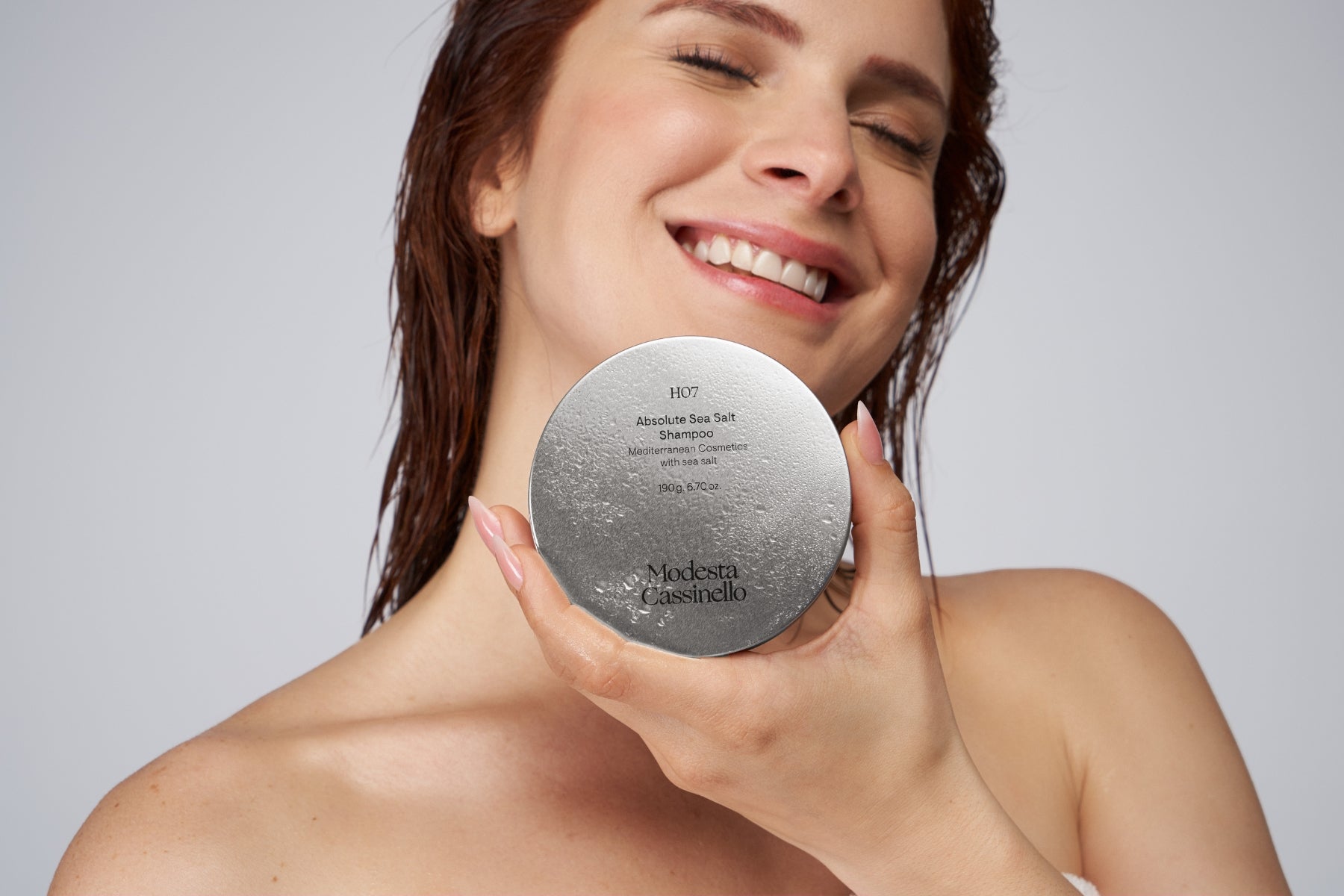
H07 Sea Salt Shampoo + H01 Frequent Use Shampoo: two levels of cleansing for oily scalps
Ever since developing our hair care line, we've maintained that an oily scalp can benefit from alternating a deep cleanse with frequent-use cleansing.
Not because one shampoo is better than the other, but because they play different roles.
When your roots are oily, heavy or saturated: H07 Sea Salt Shampoo
H07 Sea Salt Shampoo is formulated for deep cleansing.
It combines sea salt with a cleansing system made up of Sodium Laureth Sulfate and Sodium Cocoamphoacetate, and also contains Saccharide Isomerate, a humectant ingredient.
- It's especially suitable when:
your hair doesn't stay clean for long
there is a clear build-up of oil
your roots are heavy or lack volume
you use styling products
you want to remove a build-up of sweat or residue
For oily scalps we usually recommend using it 1–2 times a week, adjusting the frequency to how oily your roots actually get.
What matters is applying it to the scalp, lathering it in your hands first, massaging gently and rinsing very thoroughly.
There's no need to rub your lengths to clean them: the lather that runs through them as you rinse is usually enough.
For the next wash: H01 Frequent Use Shampoo
After a deep cleanse with H07, the next wash doesn't have to pursue exactly the same goal.
H01 Frequent Use Shampoo is formulated for normal to oily scalps and for people who need to wash their hair often.
Its formula uses gentle cleansing agents and contains niacinamide, aloe vera, betaine and glycerin, ingredients that help pair cleansing with a feeling of hydration and comfort.
Its aim isn't extreme cleansing, but effective cleansing that keeps the scalp comfortable and the hair light, loose and full of movement.
That's why H01 and H07 aren't two alternatives you have to choose between.
On a scalp prone to oiliness, they are often two complementary tools.
It's not about washing less or always using the gentlest shampoo. It's about using the level of cleansing your scalp needs for each wash. Modesta Cassinello
How often should you wash oily hair?
As often as you need to. There's no advantage in leaving oil, sweat or residue on your scalp for days simply to "train" it to produce less sebum.
How often you wash should be adapted to each person. If you need to wash your hair every day or very often, what matters is using a formula suited to that use. If you also notice build-up, or that your hair no longer responds to your usual shampoo in the same way, you can add a deeper cleanse from time to time.
A possible routine would be:
H07 when there is more oil or build-up → H01 for the next wash → continue with H01 for your regular washes → go back to H07 when your roots show they need a deeper cleanse.
There's no need to follow a rigid schedule. Observe your scalp.

Oily roots and dry ends: yes, they can coexist
Another common mistake is thinking that, if your hair is oily, it doesn't need conditioner. The condition of the scalp is one thing; the condition of the fibre is another.
Sebum is produced at the roots and doesn't always reach the lengths sufficiently or evenly, especially when hair is long, curly, coloured or bleached, or exposed to sun, heat and friction.
That's why it's perfectly possible to have:
an oily scalp + mid-lengths and ends that need conditioning.
After shampooing, use conditioner only where the fibre needs it.
On medium and long hair, H04 Revitalizing Conditioner helps detangle, soften and improve manageability without adding weight when used correctly from mid-lengths to ends.
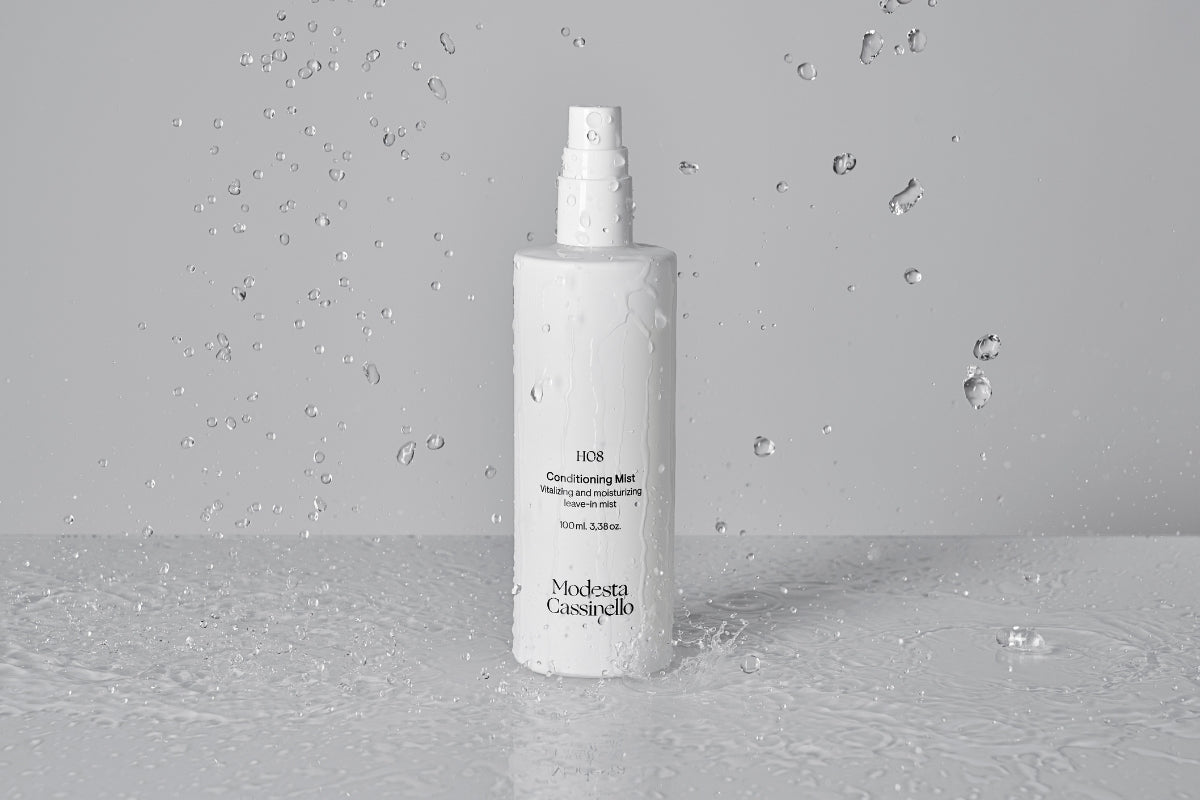
If your hair is very fine, short or thin and you prefer to control the dose more closely, H08 Leave-in Conditioning Spray adds softness and makes styling easier in a very light way.
Your roots and lengths don't have to get the same product.
Common mistakes when caring for oily hair
Trying to space out washes at all costs
If your scalp is dirty, wash it. The goal isn't to go more days with dirty hair, but to find a routine that keeps it clean and comfortable.
Always using very intensive cleansing
A deep cleanse can be extremely useful when there is build-up. That doesn't mean you need to repeat it with every wash.
Always using a shampoo that's too gentle, even if it doesn't remove oil properly
The opposite extreme doesn't work either. If sebum and residue are still clinging to your roots after washing, the cleanse wasn't enough for that moment. Remember that gentle doesn't mean it cleans less.
Applying oils or masks to the roots when they aren't formulated for the scalp
They can increase the feeling of heaviness and build-up. Always follow each product's instructions and don't take them to the roots, either when applying them or when styling.
Applying shampoo along the whole length
Shampoo should be concentrated mainly on the scalp. Needlessly rubbing your mid-lengths and ends increases friction on a part of the hair that usually needs more conditioning, not more cleansing.
Rinsing poorly
Leftover shampoo, conditioner or styling products can make hair feel heavy. Take your time rinsing, especially if you have a lot of hair.
How to tell which shampoo your scalp needs today
Before you wash your hair, take a look at it.
Are your roots very oily, heavy or saturated, or have you built up products?
Go for a deep cleanse with H07 Sea Salt Shampoo.
Is it the next wash after H07, or do you simply need to keep your roots clean?
Use H01 Frequent Use Shampoo.
Do you need to wash your hair very often?
H01 is designed precisely for this kind of routine.
Is your scalp clean but your lengths need softness?
Don't step up cleansing at the roots: condition your mid-lengths and ends.
This way of observing your hair is more useful than trying to fit it permanently under a single label.
Your scalp can be oily and, even so, its needs can change from one wash to the next.
Frequently asked questions about shampoos for oily hair
What is the best shampoo for oily hair?
There's no single shampoo suitable for every wash. A good strategy is to combine a formula that effectively removes oil and build-up when needed with another one suited to frequent use.
Can you wash oily hair every day?
Yes. If your scalp needs it, you can wash it daily using a shampoo formulated for frequent washing and a gentle washing technique.
Can an oily scalp be dehydrated?
Yes, a high presence of sebum and lower hydration can coexist, although we shouldn't assume that all oily scalps are dehydrated. Sebum, hydration and barrier function are different parameters and should be assessed separately.
Is it bad to use a shampoo with sulphates on oily hair?
Not simply because it contains them. The surfactant should be assessed within the formula as a whole and, above all, in light of the product's purpose. A more intensive cleansing system can be useful in a shampoo designed to remove build-up, while a gentler cleansing system may be more suitable for frequent washing.
Can I use conditioner if I have oily hair?
Yes. Conditioner works on the needs of the hair fibre. If you have oily roots, apply it only from mid-lengths to ends and adjust the amount to the length and thickness of your hair.
How often can I use H07 Sea Salt Shampoo?
As a general guideline, for oily scalps we recommend H07 once or twice a week and H01 for your regular washes. If your roots produce a lot of oil, the frequency can be adapted depending on how your scalp responds.
Why alternate H07 and H01?
Because they let you work with two different levels of cleansing. H07 is designed for times when there is more build-up of oil and residue, and H01 for maintaining effective, comfortable cleansing when you wash often.
A cleansing strategy adapted to your scalp
Choosing a shampoo for oily hair isn't about finding the formula that removes the most sebum, nor about routinely trying to space out your washes. The key is to adjust the intensity of cleansing to the condition of your scalp at any given time.
When there is a greater build-up of sebum, sweat or residue, a deeper cleanse may be needed. For regular washes, on the other hand, it's better to reduce the intensity of cleansing and use a formula that, as well as cleansing effectively, helps preserve the scalp's hydration and comfort.
This is particularly relevant because the amount of visible oil alone doesn't tell us how well hydrated the scalp is. Sebum and hydration are different parameters and, therefore, an oily scalp can also benefit from a routine that takes both into account.
That's why our approach combines two levels of cleansing: H07 Sea Salt Shampoo when we need to deeply remove excess oil and build-up, and H01 Frequent Use Shampoo for the next wash and as your everyday shampoo. Its gentler cleansing system, together with active ingredients such as niacinamide, aloe vera and betaine, keeps hair clean while supporting the scalp's hydration and comfort.
It's not about eliminating sebum, which is part of the scalp's normal physiology, but about removing the excess when necessary and then balancing it with gentler cleansing that helps maintain its balance and hydration.

Every article is backed by the expertise of our founder and CEO Dr Modesta Cassinello, Doctor of Pharmacy and Graduate in Nutrition, committed to excellence in skin and hair care.
Leave a comment
This site is protected by hCaptcha and the hCaptcha Privacy Policy and Terms of Service apply.