

Oily scalp: causes, consequences, and how to treat it effectively
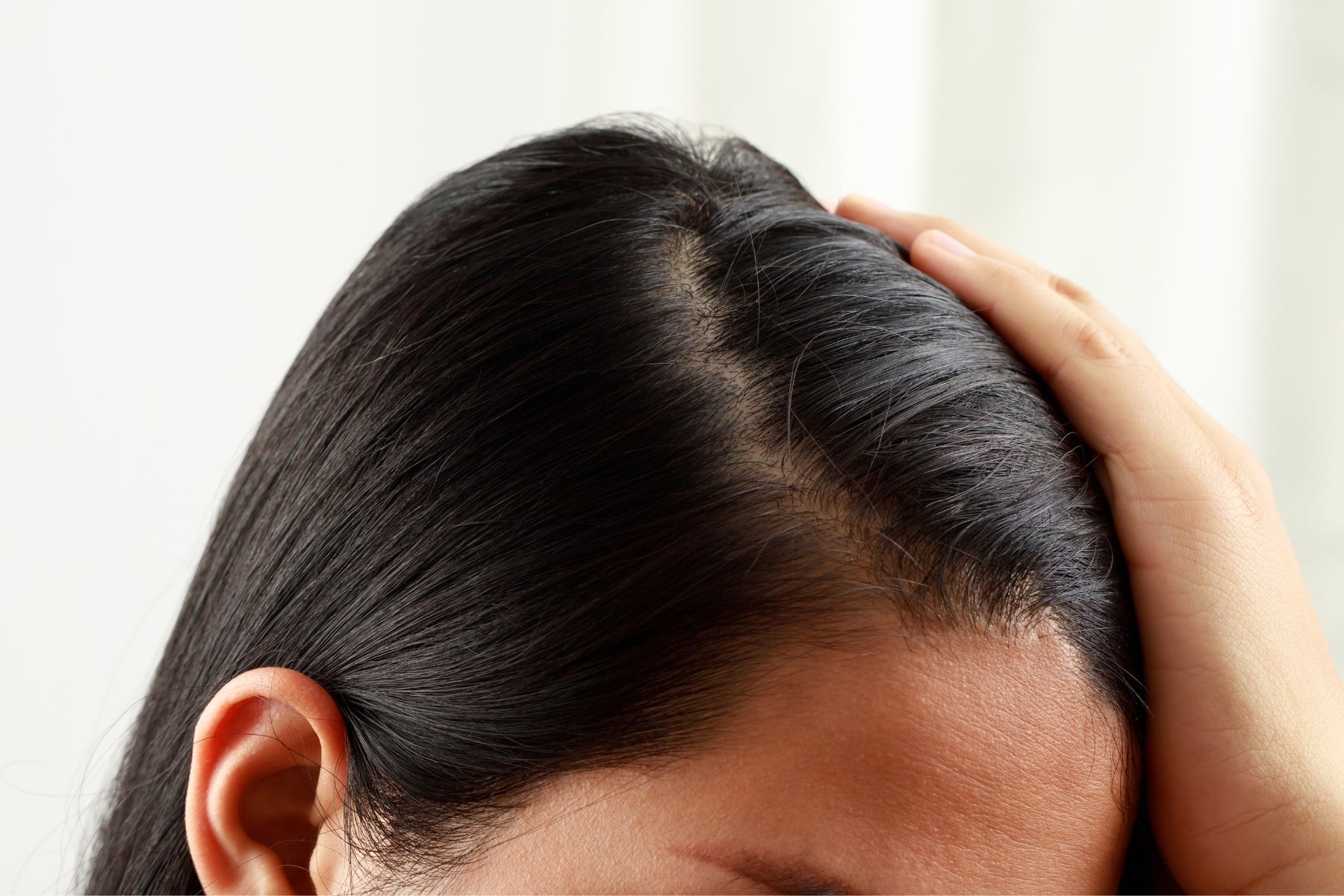
Talking about oily hair is common, but from a dermatological and cosmetic point of view, it is more accurate to talk about an oily scalp.
In most cases, excess oil is not a problem with the hair fiber, but with the skin environment where the hair originates. In fact, it is very common to observe the combination of oily roots and dry mid-lengths or ends, a scenario that often leads to confusion and inadequate routines.
More than a terminological detail, this difference is key to understanding the problem and addressing it correctly.
What does it really mean to have an oily scalp?
The scalp contains thousands of hair follicles, each associated with a sebaceous gland responsible for sebum production.
Sebum is an essential physiological substance. It participates in lubrication, skin protection, and maintaining barrier function. It is therefore not a "cosmetic enemy."
Imbalance appears when its production, composition, or distribution is altered, leading to:
- Sensation of heavy or greasy roots.
- Premature loss of volume.
- Increased tendency to flatten.
- Skin discomfort in some cases.
Unlike what is often believed, it does not always imply a hygiene problem, but rather a complex biological phenomenon.
Main factors associated with excess oil
Sebaceous activity is modulated by multiple variables. It is common for several factors to be involved simultaneously.
Among the most relevant are:
- Hormonal regulation and androgen sensitivity.
- Genetic predisposition.
- Stress and neuroendocrine modulators.
- Environmental factors (humidity, occlusion, pollution).
- Use of inappropriate or overly aggressive cosmetics.
- Alterations of the skin microenvironment.
More than a single cause, it is usually a functional imbalance of the scalp.
Oily scalp and microbiota: a key relationship
The scalp is not an inert surface, but a dynamic biological ecosystem where bacteria and yeasts coexist.

Among them, Malassezia stands out, a common microorganism whose activity largely depends on the lipid environment.
When there is a sustained excess of sebum, the conditions of the ecosystem change. This can favor phenomena such as:
- Increased visible flaking
- Sensation of a congested scalp
- Appearance of oily dandruff
It is important to understand that Malassezia is part of the normal microbiota. The goal is not to eradicate it, but to preserve skin balance.
The most common mistake: trying to “dry out” the oil
Faced with the sensation of oily hair, many people resort to extremely astringent shampoos or aggressive washing. This approach can be counterproductive.
Excessive removal of superficial lipids can alter the barrier function, increase skin reactivity, and worsen the cosmetic perception of the hair.
The key is not to "eliminate all oil," but to regulate the scalp environment using appropriate formulas.
Washing technique, water temperature, and frequency directly influence the scalp's response.
👉 How to wash your scalp correctly
Oily dandruff: how to recognize it
Not all flaking is the same.
In contexts of oily scalp, dandruff usually appears as:
- Larger flakes.
- Yellowish tone.
- Greater adherence.
Unlike fine, whitish dry flaking, this type of dandruff is associated with accumulated sebum and alterations in the skin microenvironment.
👉 Dry dandruff and oily dandruff: how to differentiate them
Can oiliness affect hair loss?
Sebum is not a direct cause of alopecia. However, a persistently altered environment can favor:
- Perifollicular microinflammation.
- Increased skin discomfort.
- Poorer cosmetic quality of the hair.
Maintaining a clean and balanced scalp helps to preserve more stable physiological conditions.
How to treat an oily scalp without damaging it
The modern approach to oily scalp is based on regulatory cleansing and skin balancing strategies.
Deeper periodic cleansing
When there is a sensation of heavy roots, cosmetic buildup, or premature loss of volume, incorporating deeper cleansing can be helpful. This type of hygiene should not be confused with aggressive over-cleansing.
👉 You can consult a recommended routine for oily scalp here, where we detail how to correctly structure cleansing and cosmetic care.

Frequent cleansing and maintenance
Washing frequency should not be governed by rigid rules, but by the actual needs of the scalp. An oily scalp can be washed frequently provided gentle formulas are used.
The goal is to avoid: accumulation of oxidized sebum, cosmetic residues, and a feeling of flattening.
Strategic care for mid-lengths and ends
Oily roots do not mean correctly conditioned lengths. When oily scalp and dry hair coexist, it is advisable to: condition mid-lengths and ends, avoid application at the roots, and minimize excessive thermal stress.
Practical tips that make a difference
- Wash with lukewarm water, avoiding extreme temperatures.
- Massage gently, without intense friction.
- Avoid cosmetic overload at the roots.
- Prioritize light and balancing formulas.
Small adjustments in washing technique often lead to noticeable changes in the cosmetic response of the hair.
Frequently asked questions about oily scalp
Does frequent washing increase oiliness?
No. Sebaceous activity is regulated by complex biological mechanisms, not by the number of washes.
Does an oily scalp indicate poor hygiene?
No. Hormonal, genetic, and skin factors are the main modulators.
Should I avoid oils or conditioners?
Not necessarily. The key is where and how they are applied.
Modesta Cassinello's vision
An oily scalp does not require cosmetic aggression, but rather balancing strategies.
Understanding skin physiology, respecting barrier function, and using well-designed formulas helps restore comfort, lightness, and the cosmetic response of the hair.
Hair beauty begins in a functional skin environment.

Each article is backed by the experience of Dr. Modesta, pharmacist and founder, committed to excellence in hair care.
Leave a comment
This site is protected by hCaptcha and the hCaptcha Privacy Policy and Terms of Service apply.