

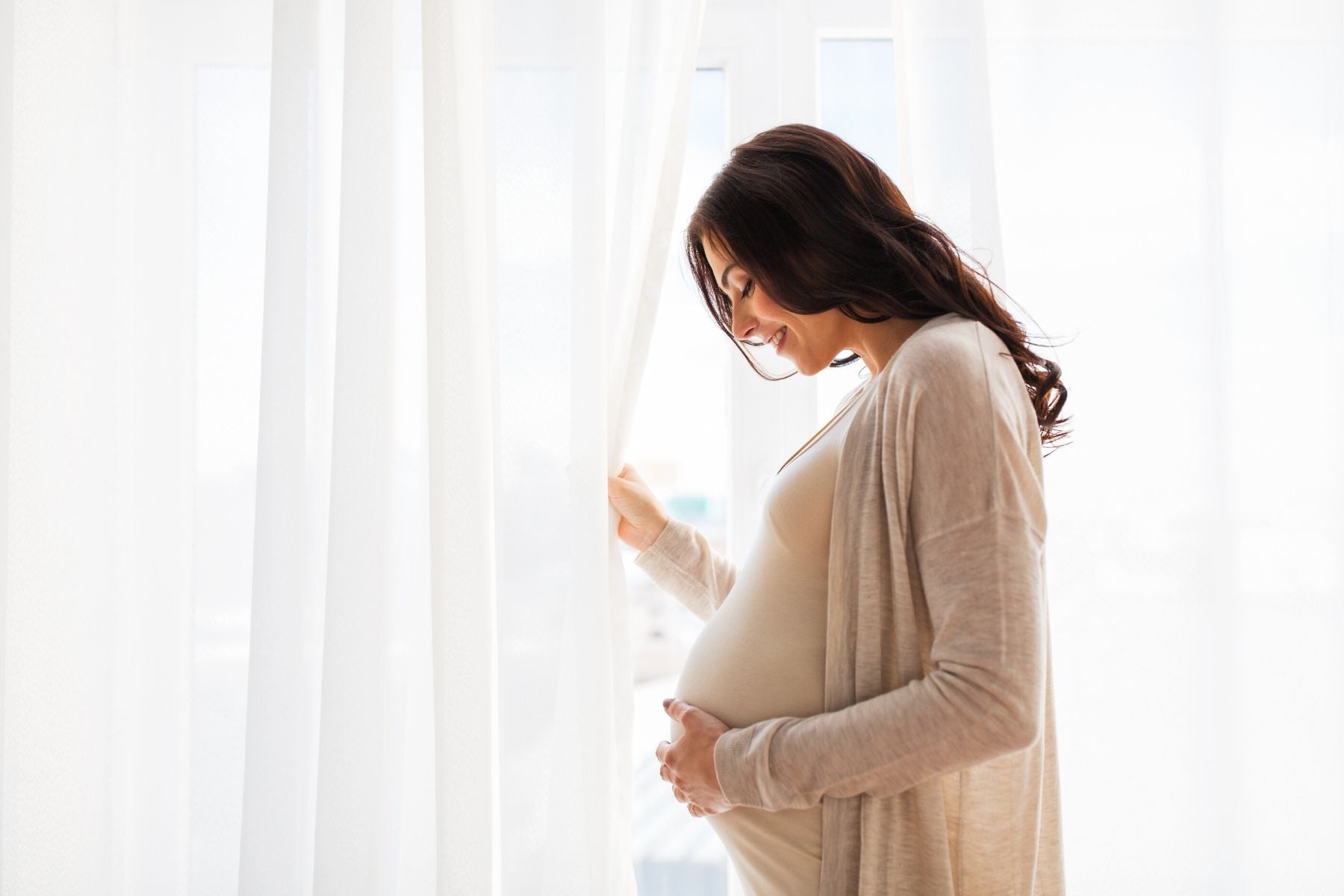
Hair care in pregnancy: changes, postpartum hair loss, and recommended routine
📅 Published: March 2020 — Updated: May 2026
During pregnancy, the body undergoes a period of intense hormonal, immunological, and vascular adaptation. These changes can be reflected in the skin, scalp, and hair quality: increased density, shine, greater sensitivity, tendency to oiliness, dryness, itching, texture changes, or, months after childbirth, more noticeable hair loss.
Understanding these changes helps to experience them more calmly and to choose a more respectful care routine. Because during pregnancy, it's not about doing more, but about caring better.
The Scalp Is Also Skin
When we talk about hair in pregnancy, we shouldn't just look at the hair fiber. The scalp is skin: it has a skin barrier, microbiota, sebaceous glands, vascularization, and a direct relationship with the hair follicle.
Therefore, new sensations may appear during this stage: roots that become oily faster, a more sensitive scalp, tightness, itching, flaking, or reduced tolerance to products that previously worked well. It doesn't always mean there's a significant problem; often it's a physiological response to the changes inherent in pregnancy.
The key is to support the scalp with effective but gentle formulas, capable of cleansing thoroughly without unnecessarily disrupting its balance.
Hair Changes During Pregnancy
One of the most common changes is the feeling of having more hair. During pregnancy, many women notice their hair is denser, has more body, or is shinier. This is partly related to the prolongation of the anagen phase, the growth phase of the hair cycle.
Simply put: during pregnancy, some hair that would normally have entered the shedding phase may remain in the growth phase longer. This is why many women notice their hair is more abundant.
This effect, however, is not permanent.
Postpartum Hair Loss: Why It Happens
After childbirth, and sometimes also after stopping or modifying breastfeeding, hormone levels change abruptly. As a result, many follicles simultaneously enter a resting phase, and weeks or months later, more noticeable hair loss occurs.
This hair loss is known as postpartum telogen effluvium. It usually appears between 2 and 4 months after childbirth and, although it can be striking, in most cases it is temporary and reversible. Recovery usually occurs gradually over the following months.
However, if the hair loss is very intense, prolonged, appears in patches, is accompanied by itching, pain, significant flaking, or if there is suspicion of anemia, thyroid disorder, or another medical cause, it is advisable to consult a dermatologist.
Not Just Hair Loss: Texture Changes
During pregnancy, some women notice their hair is shinier and has more volume; others perceive it as drier, oilier, frizzier, or with a different texture. Even the curl pattern or the feel to the touch can change.
These changes can be due to a combination of hormonal factors, variations in sebaceous production, changes in washing habits, reduced skin tolerance, or changes in the care routine.
Therefore, the hair care routine during pregnancy should be flexible. What worked before may not always be exactly right now.
Do You Notice Oilier Hair During Pregnancy?
Oilier roots or the feeling that hair doesn't stay clean for long can appear during pregnancy. In these cases, the goal should not be to aggressively "strip" the oil, but to effectively cleanse the scalp and maintain a feeling of lightness without causing rebound oiliness, tightness, or irritation.
You can alternate a gentle everyday shampoo, respectful of the scalp, with occasional deeper cleansing if you notice accumulation of oil, sweat, or styling products.
At Modesta Cassinello, H01 Frequent Use Shampoo is a good option for normal to oily scalps that need frequent, comfortable cleansing without a heavy feeling. If you also notice your hair is saturated or doesn't stay clean for long, H07 Sea Salt Shampoo can be used occasionally as a weekly deep cleanse, always adjusting the frequency to your scalp's tolerance.
What if the scalp is more sensitive?
During pregnancy, skin sensitivity can also increase. Some women notice itching, tightness, or reduced tolerance to perfumes, essential oils, intense hair treatments, or overly detergent products.
In this case, it may be helpful to simplify the routine: choose gentle formulas, avoid constant product changes, and observe how the scalp responds.
H03 Shine and Vitality Shampoo can be an especially good fit when seeking a gentle cleanse, shine, and comfort, as it is a fragrance-free and essential oil-free formula, designed to care for hair without overstimulating the scalp.
Conditioning Matters Too
During pregnancy and postpartum, hair fiber can feel more fragile, dry, or difficult to detangle. A lightweight conditioner helps reduce friction, improve detangling, and protect the fiber from mechanical breakage.
The key is to avoid excessively heavy formulas if hair has lost volume or becomes oily easily. A good conditioner should leave hair softer and more manageable, but without weighing it down.
H04 Revitalizing Conditioner can be a good ally during this stage because it provides softness, shine, and detangling with a light texture, without a heavy feeling.
Skin during pregnancy: pigmentation, sensitivity and skin barrier
Pregnancy can also cause visible skin changes. Among the most common are hyperpigmentation, the linea alba, darkening of the areolas, or the appearance of melasma, especially in sun-exposed areas such as the face.
Melasma is closely related to hormonal factors, individual predisposition, and sun exposure. Therefore, daily photoprotection is one of the most important gestures during this stage. Not just in summer: also on cloudy days or if there is frequent exposure to outdoor light.
In addition, the skin may feel drier, more reactive, or sensitive. In these cases, it is advisable to prioritize hydration, gentle cleansing, and well-tolerated formulas. During pregnancy, it is not the best time to experiment with irritating active ingredients or intensive depigmenting treatments without professional supervision.
Ingredients and treatments: caution, not fear
During pregnancy, it is advisable to be cautious with certain dermatological and cosmetic treatments, especially topical or systemic retinoids, certain depigmenting agents, and medical-aesthetic treatments.
In contrast, ingredients such as niacinamide, vitamin C, or azelaic acid are usually considered common options for skin care during this stage, provided they are well formulated and there is good individual tolerance.
In cases of acne, dermatitis, severe melasma, significant itching, or new lesions, it is recommended to consult a dermatologist or the relevant healthcare professional.
Can you dye your hair during pregnancy?
Available evidence and organizations such as NHS and ACOG consider that hair coloring during pregnancy is generally safe, as systemic absorption is low when used appropriately.
Even so, many women prefer to wait until the second trimester, space out hair dyes, or choose techniques like highlights or balayage, where the product has less direct contact with the scalp.
As a practical criterion: perform coloring in a well-ventilated area, avoid leaving the product on longer than indicated, rinse thoroughly, and discontinue treatment if irritation occurs. If you have dermatitis, wounds, intense itching, or a very reactive scalp, it is best to consult beforehand.
Recommended hair care routine during pregnancy and postpartum
During pregnancy, seek a simple, consistent, and well-tolerated routine:
- Wash your scalp as often as needed, without fear, but with gentle formulas.
- Alternate frequent cleansing with deep cleansing only if you notice oiliness, saturation, or loss of volume.
- Condition mid-lengths and ends to reduce friction, improve detangling, and protect the hair fiber.
- Avoid aggressive treatments if your scalp is sensitive or your hair fiber is more fragile.
- Also care for your skin: gentle cleansing, hydration, and daily photoprotection.
And above all, remember that postpartum is also part of the process. Hair loss can be alarming, but in many cases it responds to a physiological readjustment of the hair cycle.
If you notice oilier roots or hair that doesn't stay clean for long
Choose H01 Frequent Use Shampoo, an effective and comfortable cleanse for normal to oily scalps, without a heavy feeling.
View H01 Frequent Use ShampooIf your scalp is more sensitive or reactive
Choose H03 Shine and Vitality Shampoo, a gentle formula, fragrance-free and essential oil-free, designed to cleanse delicately and provide shine.
View H03 Shine and Vitality ShampooIf the fiber is drier, more fragile, or tangles easily
Incorporate H04 Revitalizing Conditioner into mid-lengths and ends to improve detangling, provide softness, and help reduce friction without weighing it down.
View H04 Revitalizing ConditionerIf you also notice buildup, loss of volume, or a saturated hair feeling, you can consider an occasional deep cleanse with H07 Sea Salt Shampoo, always adjusting the frequency to your scalp's tolerance.
Care without over-treating
Pregnancy does not require a complex routine. It's about making better choices: cleansing without aggression, hydrating without saturation, and using well-tolerated formulas that accompany the changes in the skin, scalp, and hair.
The goal is to keep the scalp clean and comfortable, protect the hair fiber, respect the skin barrier, and accompany hair changes without aggression. Because beautiful hair during pregnancy and postpartum begins with something deeper: well-cared-for skin and scalp.
This article is for informational purposes only and does not substitute medical evaluation. During pregnancy and lactation, any dermatological treatment, supplement, or specific active ingredient should be evaluated with the corresponding healthcare professional, especially in cases of intense itching, skin lesions, dermatitis, inflammatory acne, persistent hair loss, or medical history.
References
- Kroumpouzos G, Cohen LM. Dermatoses of pregnancy. J Am Acad Dermatol. 2001;45(1):1-19.
- Ambros-Rudolph CM. Dermatoses of pregnancy. N Engl J Med.
2011;365(7):650-659. - Wong RC, Ellis CN. Physiologic skin changes in pregnancy. J Am Acad
Dermatol. 1984;10(6):929-940 - Malkud S. Telogen effluvium: a review. J Clin Diagn Res.
2015;9(9):WE01-WE03. - Headington JT. Telogen effluvium. Dermatol Clin. 1993;11(3):465-479.
Leave a comment
This site is protected by hCaptcha and the hCaptcha Privacy Policy and Terms of Service apply.